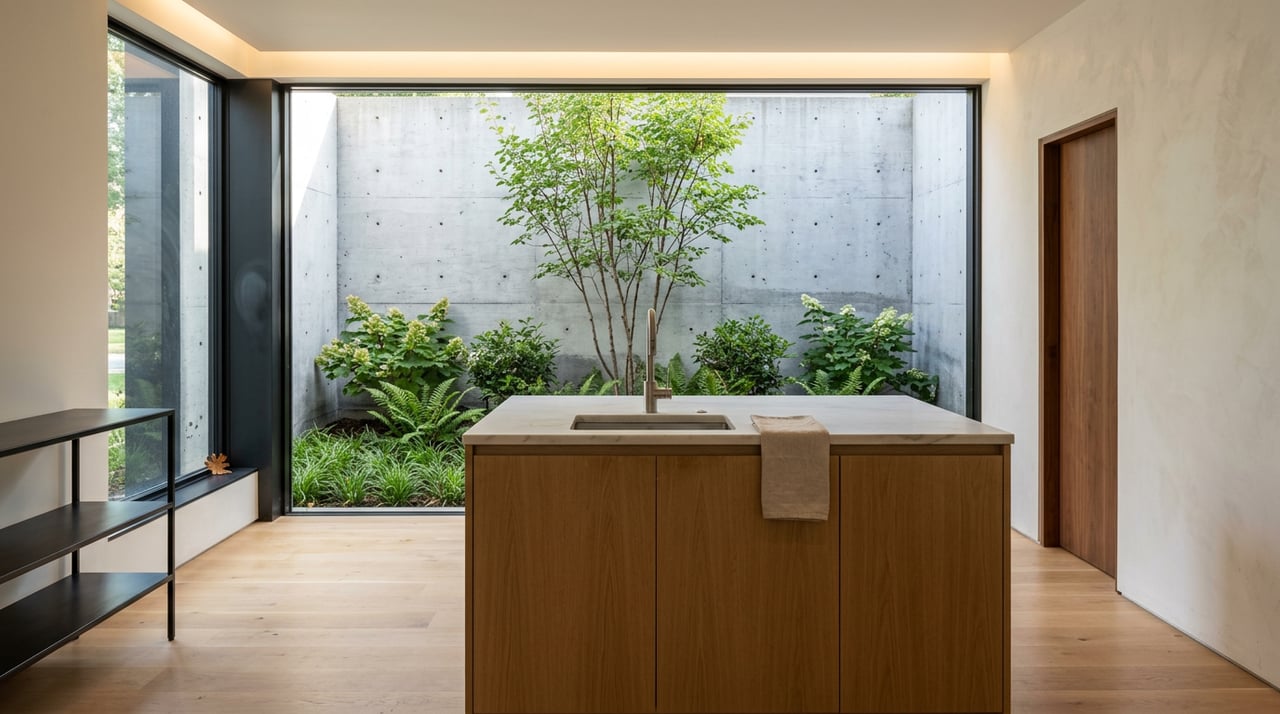
Open a portal, type in Charlottesville, and a single number appears. Somewhere between $477,500 and $558,750, depending on which line you're reading. That number is the least useful piece of information you can carry into a conversation about an architect-designed modern home in this market. The homes worth flying down to see are not priced by that median. They are priced by a set of constraints the portals never surface: what the Board of Architectural Review will approve, which residential parcels can legally accept a modern insertion, and what a voided zoning ordinance did to the pipeline of new work.
The thesis is simple. In Charlottesville, design-driven inventory trades in a parallel market shaped by review boards and land-use rules, not by comparable sales. If you understand that, the price gaps start to make sense.
The gap the portals hide
Two numbers, both correct, both from Q1 2026 reporting through the Charlottesville Area Association of Realtors: the City of Charlottesville median sat around $477,500 while Albemarle County came in near $550,000. Zoom in one quarter further to Q4 2025 and Albemarle was $558,750, up roughly 4% year over year, with Charlottesville at $546,140, up about 10%. In Q1 2026, Albemarle sales volume fell 11% while the median still rose 1.7% to $550,000. That is the shape of a premium market. Transactions thin out, but the homes that do change hands hold their value, because the inventory at the top is scarce and specific.
For a design-minded buyer, the interpretation is this: the citywide median is being pulled down by a base of smaller, older housing stock inside historic districts. The architect-designed inventory clusters in county submarkets and on select city parcels where either the land or the review process allows a modern insertion. The median tells you nothing about those parcels.
Where modern actually lives here
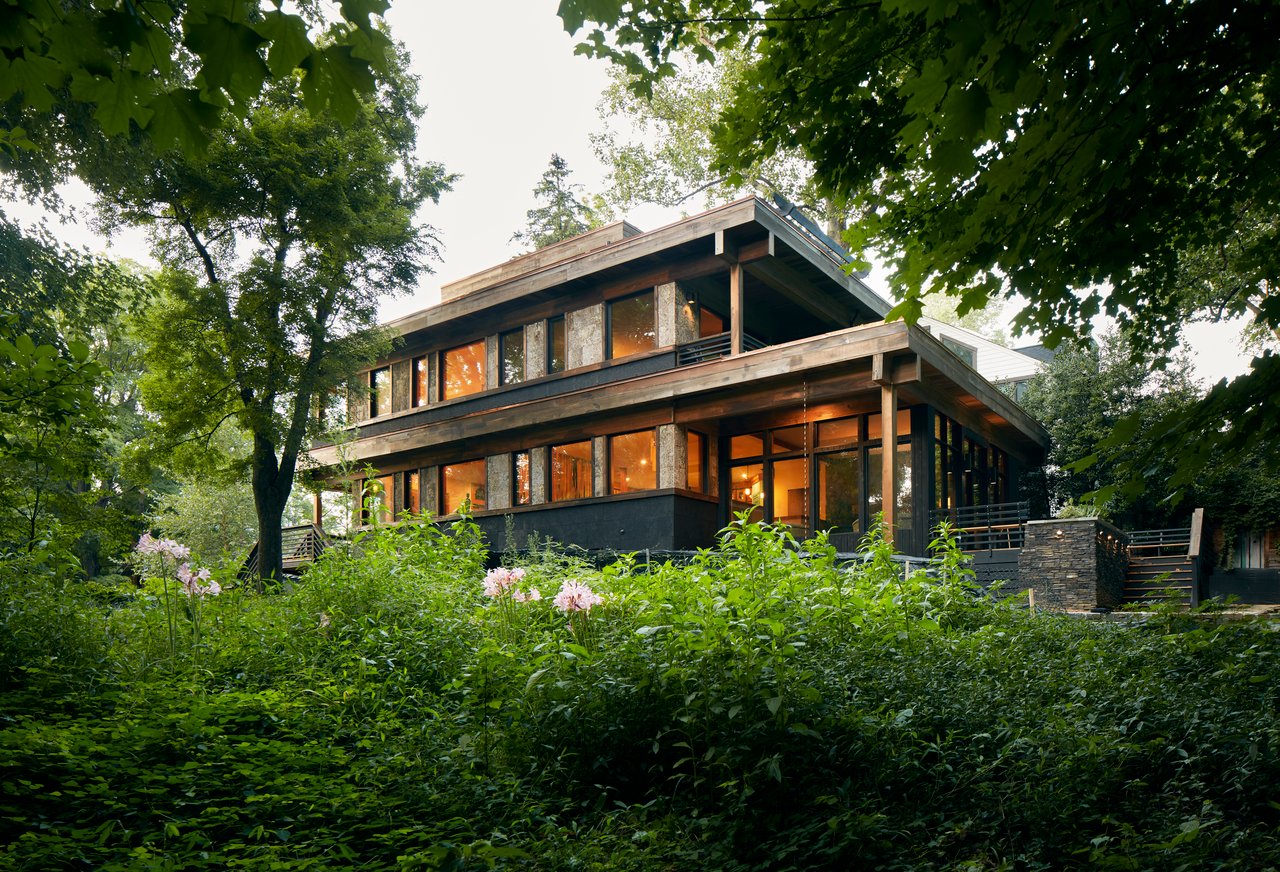
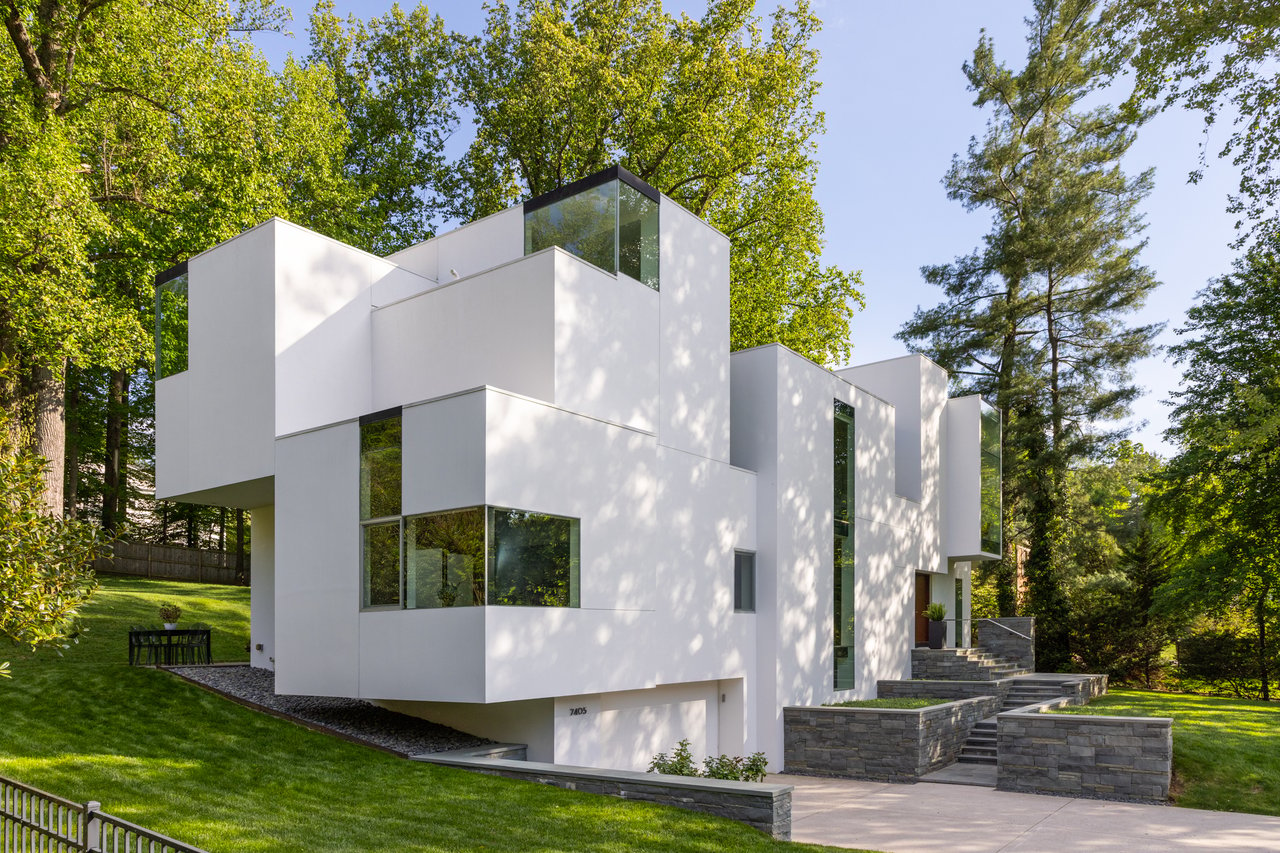
Charlottesville's modern residential legacy is real, if quiet. Edward Durell Stone, who later designed the Kennedy Center, built a 1952 house known as Stone's Throw for the Frankel family in Meadowbrook Heights. Jim Tuley, who joined UVA's School of Architecture in 1968, produced roughly two dozen modern houses across the city and Albemarle County before his death in 1994, including a late-career home in North Downtown for Pam Friedman and Ron Bailey that reads as an asymmetric geometric object on a street of Victorians. Ed Ford and others have kept that thread active through UVA.
The working design community today is boutique and named. HubbHouse, founded by an architect trained at the University of Florida and paired with a UVA-trained partner, takes a small number of commissions a year. HEDs Architects works the modern and green residential niche. Pillar & Perch runs an architect-led design-build model out of Charlottesville. Snyder Design Build has operated downtown since 2009. Stoneking von Storch and the Gaines Group, the latter working out of a studio just east of the Downtown Mall since 1987, round out a short list of firms whose work you actually encounter driving through Ivy, Keswick, Crozet, and North Downtown.
Why does the design work concentrate outside the city core? A land-use answer, not a taste answer. Reporting citing the National Zoning Atlas notes that in Albemarle County, roughly 99% of more than 400,000 acres of residential land is zoned for single-family units. That constraint keeps custom architect-designed builds out on rural and semi-rural parcels rather than as urban infill.
The design-review layer inside city limits
Cross into the city and a different rule set takes over. The Board of Architectural Review, a nine-member citizen board appointed by City Council, holds authority over exterior alterations, additions, new construction, and demolitions in the city's Architectural Design Control districts and its Historic Conservation Districts, as well as on Individually Protected Properties. Any of those actions requires a Certificate of Appropriateness. The BAR meets the third Tuesday of most months.
The ADC districts are specific and worth knowing before you write an offer on anything within them:
- North Downtown
- Downtown
- Ridge Street
- West Main Street
- Wertland Street
- The Corner
- Rugby Road, University Circle, and Venable
- Oakhurst-Gildersleeve
Historic Conservation Districts operate on a lighter touch. Smaller structures, additions, and demolitions not visible from a public street can skip BAR approval, and the guidelines explicitly state that modern, sustainable, energy-efficient construction is encouraged when done thoughtfully alongside older buildings.
That last sentence is the one design-minded buyers should hold onto. The BAR is not a modern-architecture veto. It is a filter for scale, materials, orientation, and how new work meets old. The December 2025 vote to deny a Certificate of Appropriateness for a seven-story Fifeville proposal that tried to fold in two protected structures shows the ceiling. A February 2026 pre-application discussion of a single-family house on the 700 block of Lexington Avenue in the Martha Jefferson Historic Conservation District, where members flagged the Development Code's 65%-of-lot-width active depth rule against a proposed carport, shows the granularity. Both are useful data points if you are contemplating either an infill build or a substantial modern addition inside a district.
The zoning pause and what it did to supply
Charlottesville adopted a new Development Code in late 2023 that took effect in early 2024, aimed at allowing more housing types and density. In mid-2025, that ordinance was voided by a court action. The city paused zoning application approvals while it worked through next steps. For a market already constrained by geography, that pause matters. Design-forward new construction, always a small share of the inventory, got smaller. The competitive dynamic for existing architect-designed homes tightened, even as the broader market softened.
That is the piece the median genuinely cannot show you. Across the CAAR footprint, Q1 2026 ended with 1,071 active listings, up 22% year over year, and months of supply climbed from 2.9 to 3.4. On the surface, that reads as buyer relief. In the modern-architecture segment, it reads differently. Well-priced modern inventory still moves. Everything else lingers. Q4 2025 median days on market ran 16 in Albemarle and 22 in Charlottesville. By spring 2026, the regional average had stretched to 28 days from 18 a year earlier, with the 30-year fixed sitting near 6.23% in late April.
Reading a listing in this market
Once you accept that architect-designed homes here trade on a different set of variables, the transaction friction becomes predictable rather than surprising.
Land questions matter more than square footage. Rural and estate properties in Albemarle carry easements, private roads, well and septic systems, and boundary questions that a title attorney needs time to work through. Prime Title & Escrow's 2026 Central Virginia survey put it plainly: in Charlottesville and Albemarle, property-specific diligence matters as much as price.
District status governs what you can change. Before falling for a house inside one of the eight ADC districts, pull the Individually Protected Properties list and confirm the district guidelines that apply to the parcel. A house that photographs well may sit under review rules that constrain the modern renovation you had in mind. The city maintains the Historic Districts and Design Review portal for exactly this purpose.
The BAR calendar is part of your timeline. If your plans involve exterior work, budget for a preliminary discussion followed by a formal application. That is weeks, not days, and it needs to sit inside your due diligence or your renovation schedule, not after closing.
County parcels carry a different risk profile. Fewer review layers, more site work. Grading, well yield, septic design, and access easements are where surprises live.
| Metric | Q4 2025 | Q1 2026 |
|---|---|---|
| Albemarle median sale price | $558,750 | $550,000 |
| Charlottesville city median | $546,140 | ~$477,500 |
| CAAR active listings | ~925 | 1,071 |
| CAAR months of supply | ~3.0 | 3.4 |
The takeaway from that table is not that prices are falling. It is that inventory finally exists to negotiate against, and the standard deviation between well-designed homes and everything else is widening.
FAQ
Does BAR review apply to interior renovations? No. The BAR reviews exterior alterations, additions, new construction, and demolitions in designated districts and on Individually Protected Properties. Interior changes, like-for-like maintenance, and repairs to unsafe structures ordered by the Building Code Official fall outside its review.
Is a modern addition even possible on a house inside an ADC district? Yes, in principle. The design guidelines encourage additions that read as additions, meaning they should not visually overpower the original building in scale or design. Modern materials and energy-efficient construction are contemplated. The path runs through a Certificate of Appropriateness, and the outcome depends on the design and the specific district guidelines.
Why does Albemarle look more expensive than the city on some reports and less on others? It depends on the slice. Q4 2025 medians ran close, with Charlottesville up 10% year over year. Q1 2026 medians widened again as city sales volume rose and pulled in more mid-price transactions. The CBSA-wide median listing price hit $559,000 in December 2025 per FRED data. Different denominators, different pictures. For architect-designed inventory specifically, the closed-sale data tells you less than the comps for the specific architect or district.
If you are weighing an architect-designed home in Charlottesville or Albemarle, the analysis you need is not another portal screenshot. It is a read of the parcel, the district, and the design-review path that comes with it. That is the work listModern does. Reach out through our Charlottesville page to start a private conversation about what you are looking for, or ask about our home valuation if you own a modern home here and want a sober read on where it sits in this market.