In August 2020, pickleball court markings appeared on the neighborhood's tennis courts. The Hollin Hills Pickleball and Tennis Club grew from 16 members to 74 in its first year and, by July 2022, had converted two of the community's front tennis courts into six dedicated pickleball courts, the first outdoor private setup of its kind in the Mount Vernon district.
The pickleball club was only one example.
That pattern is the real story of Hollin Hills, and it explains why the neighborhood's calendar looks the way it does every fall. This is a community where the shared infrastructure, the parks, the traditions, even the disagreements about how the land gets managed, tends to start with one or two residents deciding something should exist, rather than an amenity a developer installed and handed over. If you live here, you already sense this. What's less obvious is how consistently it repeats.
The Party Nobody Organized First
Oktoberfest is the clearest example. The tradition began in 2013 when two residents, Jaelith Hall-Rivera and David Rivera, decided the neighborhood needed a fall party. It didn't start as an official Civic Association function. It became one, and now it's a CAHH-sponsored fixture that takes over the Hollin Hills Pool parking lot every autumn, a gathering residents affectionately call "Munich on the Potomac," complete with bratwurst, beer, and the Mount Vernon German band working through a set of polkas.
The same arc shows up with the Winter Potluck, which started in 1996 under the name "Community Appreciation Day" and featured lasagna and, for reasons nobody has fully explained, face painting. It's been running every year since, minus the face paint. Two residents had an idea, the neighborhood liked it, and the Civic Association eventually put its name on it.
That's worth sitting with, because it means the events on your calendar this fall aren't there because a homeowners' association scheduled programming. They're there because somebody in your neighborhood, at some point, decided the gap was worth filling.
The Parks Run on the Same Fuel
The seven parks the Civic Association maintains, Wildlife Sanctuary, Sutton Potter, Brickelmaier, Goodman, Paul Spring, Voigt Memorial, and McCalley, cover more than 30 acres, and none of them run themselves. Park wardens, volunteers who monitor tree health and organize invasive-plant removals, are assigned two or three to a park. The Civic Association's most recently published parks budget, $38,800 for 2024, comes from membership dues, donations, and grants, including from Friends of Hollin Hills, the nonprofit residents formed in 2017 specifically to support architectural preservation and park improvements.
That grant money built something specific. In 2023, the Parks Committee used a Friends of Hollin Hills grant and volunteer labor to turn an invasive-choked corner of McCalley Park, the site named for Charles "Mac" McCalley, the neighborhood's construction foreman from 1949 to 1971, into a native plant demonstration garden. Where English ivy, bamboo, and Japanese stiltgrass used to crowd out everything else, there's now a planted showcase built to teach residents what a Virginia native landscape actually looks like.
McCalley isn't the only park with a personality residents built into it. Sutton Potter has earned an unofficial nickname among families here: "suicide hill," for the sledding runs that appear the moment it snows. Voigt Park, along Rippon Road, has a bocce court that a handful of enthusiasts built themselves. There's no formal bocce club yet, just neighbors who show up, and the occasional impromptu tournament.
Not Everyone Agreed on How to Spend That Energy
The same instinct that builds a pickleball club also produces disagreement when residents don't see eye to eye on how shared land should be managed. As Hollin Hills Journal reports, between roughly 2020 and 2022 Fairfax County undertook a stream restoration project in Goodman and Brickelmaier Parks, an estimated $3.6 million effort to stabilize eroded streambeds, some trenches had cut as deep as 16 feet, remove invasive plants, and put in more than 4,000 native trees and understory plants.
Not every resident supported the approach. A group calling itself Hollin Hills Parks Preservation formed in 2019 and later filed suit against the Civic Association and the Fairfax County Board of Supervisors over the easements the county needed to do the work. The group later withdrew its legal effort. Whatever side of that debate a longtime resident landed on, the episode makes the same point as the pickleball courts and the Oktoberfest founding: people here treat the shared land as something they're personally responsible for, not something a management company handles on their behalf.
What That Means for the Rest of This Fall
None of this is abstract history. It shapes what's actually on your calendar right now. Oktoberfest returns to the pool lot sometime this season, the way it has every year since 2013. Friends of Hollin Hills will sponsor its annual Turkey Trot around Thanksgiving, a tradition that sits alongside the group's other work, including the three-day symposium it organized in 2024 on architect Charles Goodman's legacy. Park wardens will keep scheduling clean-up parties as the leaves come down, the kind of afternoon where you show up to pull vines and leave having met three neighbors you'd only nodded to before, plus, by tradition, free donuts.
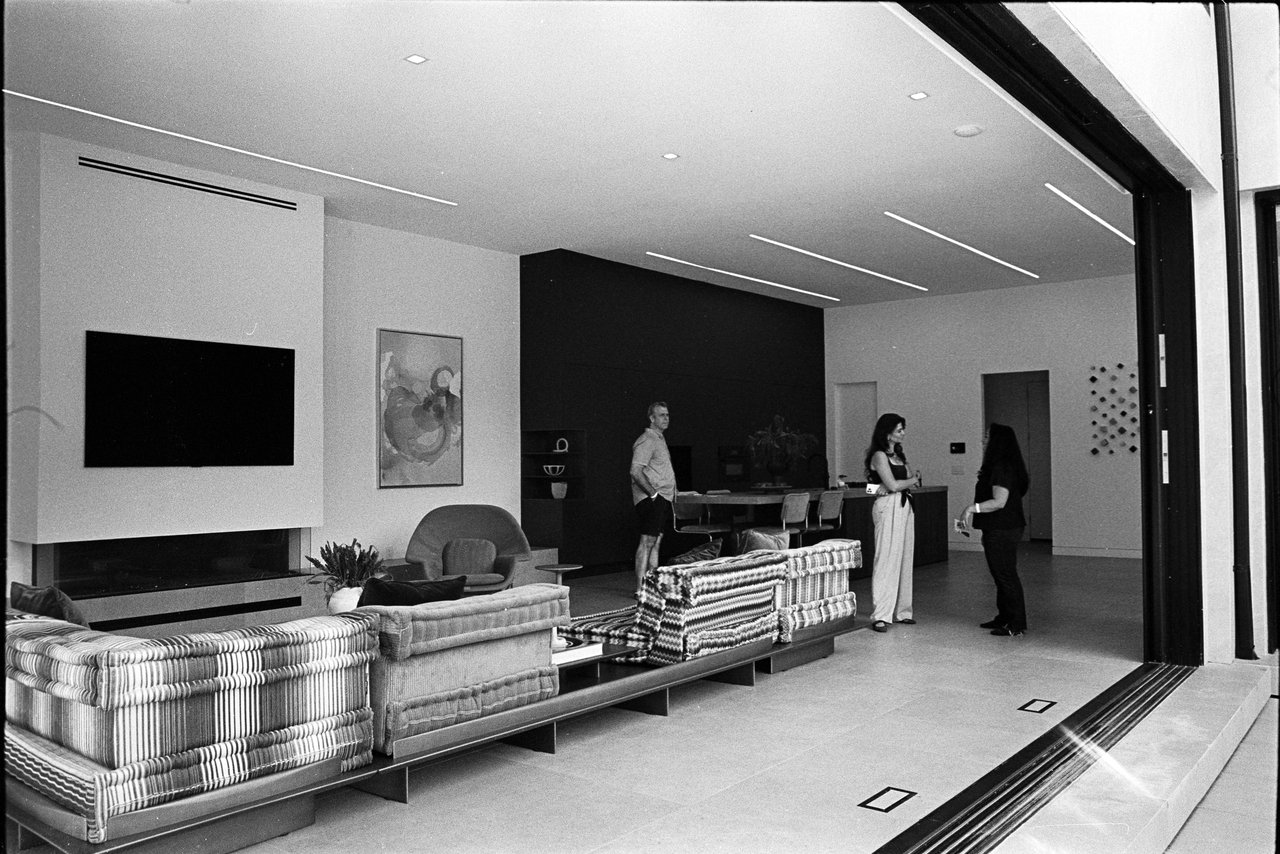
And if you're still thinking about the House + Garden Tour that sold out its 2,000 tickets back in May, remember that the docents walking visitors through those homes were homeowners, not hired staff. The tour itself is a Civic Association tradition dating to 1953, run every two years almost entirely on volunteer labor. The next one isn't until 2028, but the same people who staffed this year's shuttle buses and living-history displays are the ones who'll do it again.
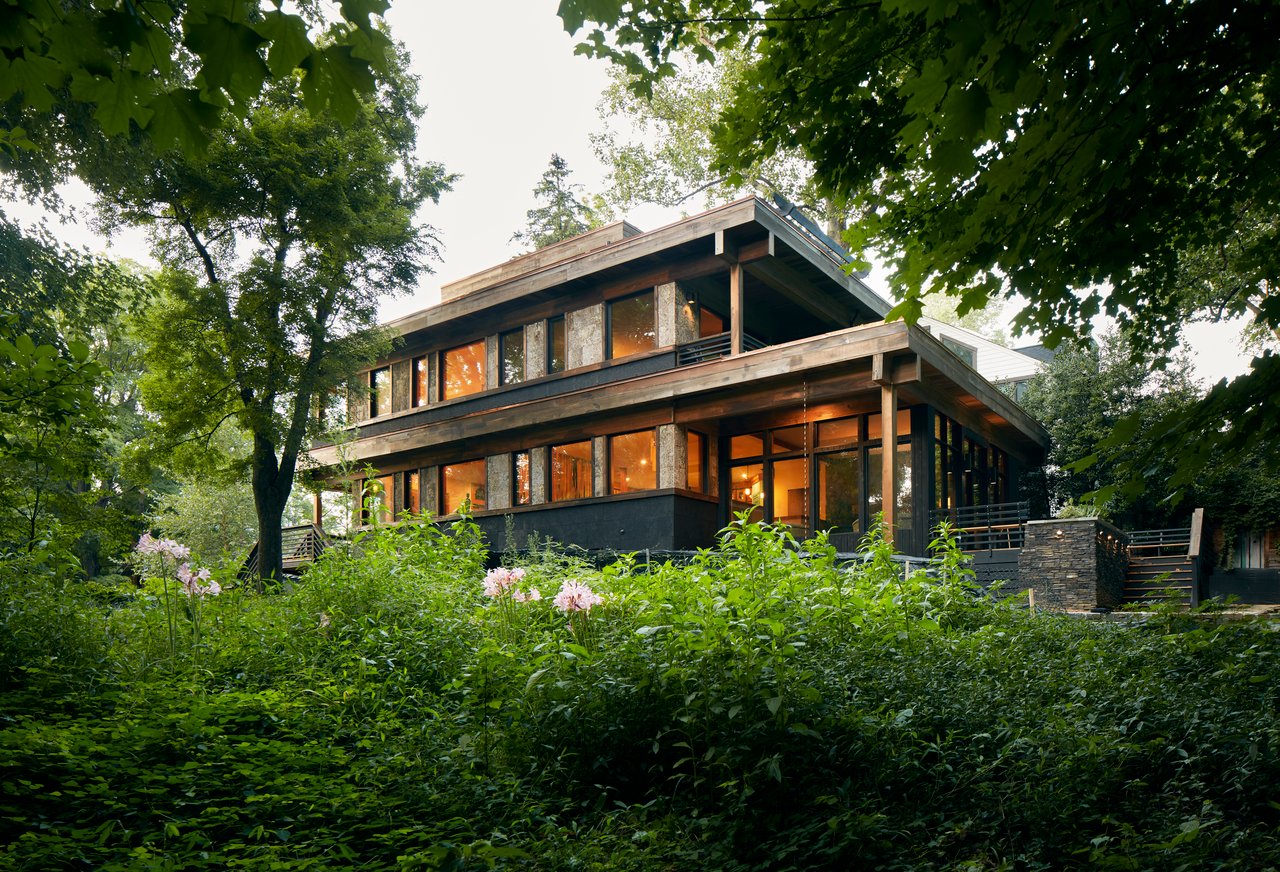
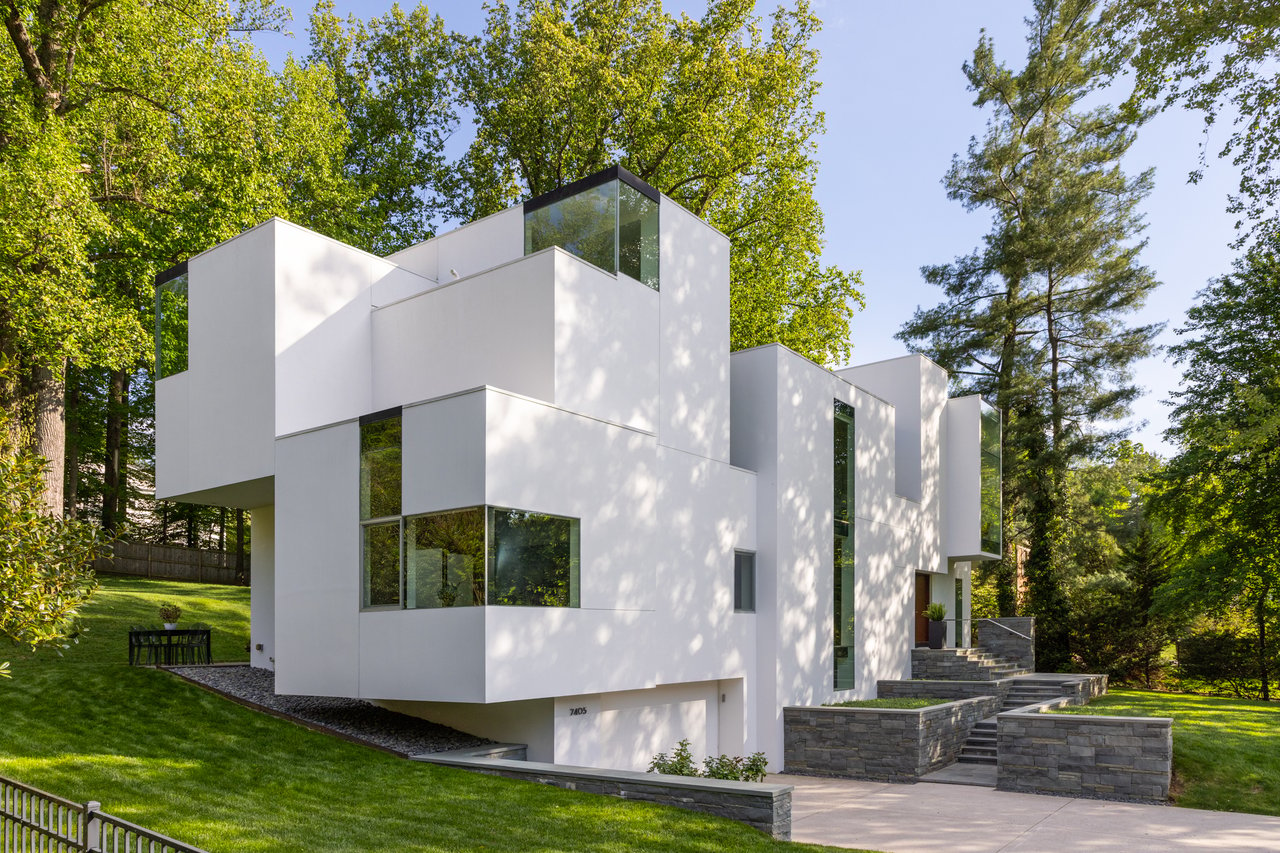
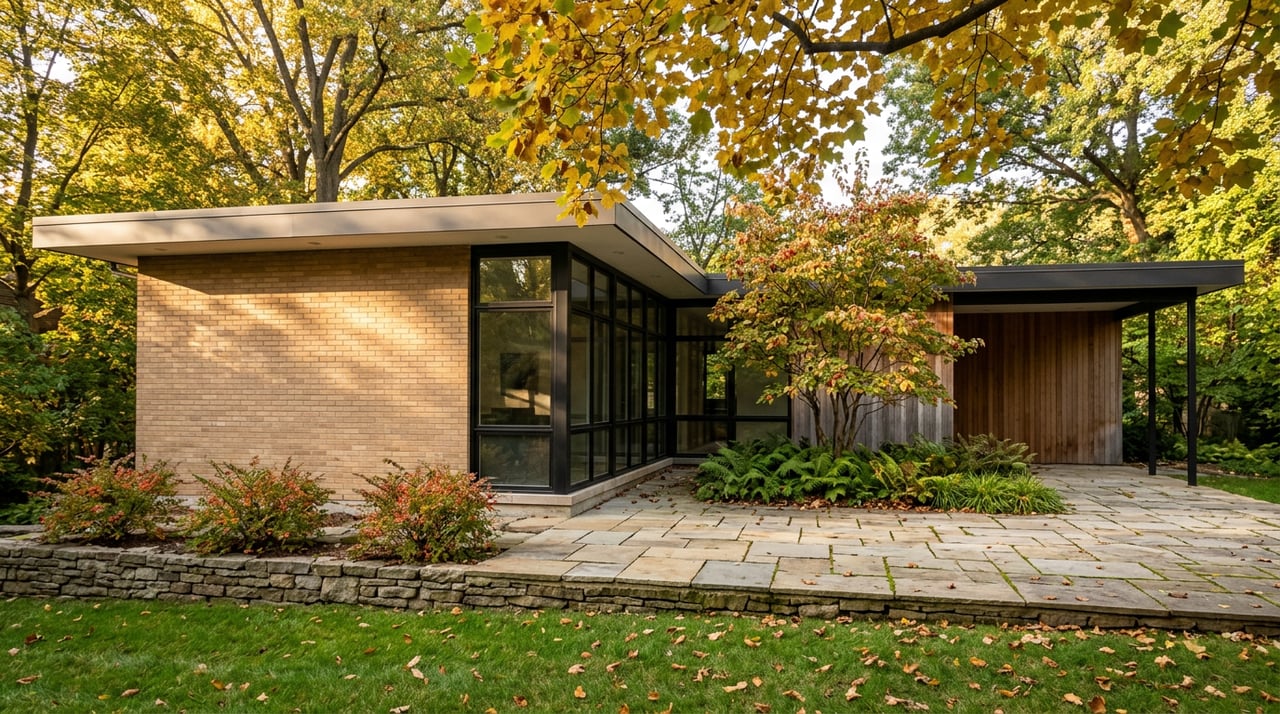
Hollin Hills is often described for what Charles Goodman and Robert Davenport built here between 1949 and 1971, more than 450 homes on 326 acres, the first community in the Washington area made up entirely of contemporary architecture, listed on the National Register of Historic Places in 2013. That history explains the houses. It doesn't explain the pickleball courts, the Oktoberfest, or the native garden at McCalley. Those came later, and they came from residents who decided the neighborhood needed something and then built it, one resident-led effort at a time.
If you're weighing what a Goodman-designed home in a community like this is actually worth, beyond the architecture itself, listModern spends its time inside exactly this kind of design history across the Virginia side of the region. Reach out when you're ready to talk about your Hollin Hills home.