By listModern
With insights from Ron Mangas, Jr
Featured Homes
David Jameson’s Study in Ambiguous Scale, Projection, and Spatial Illusion
Most houses explain themselves immediately.
NaCl House does not.
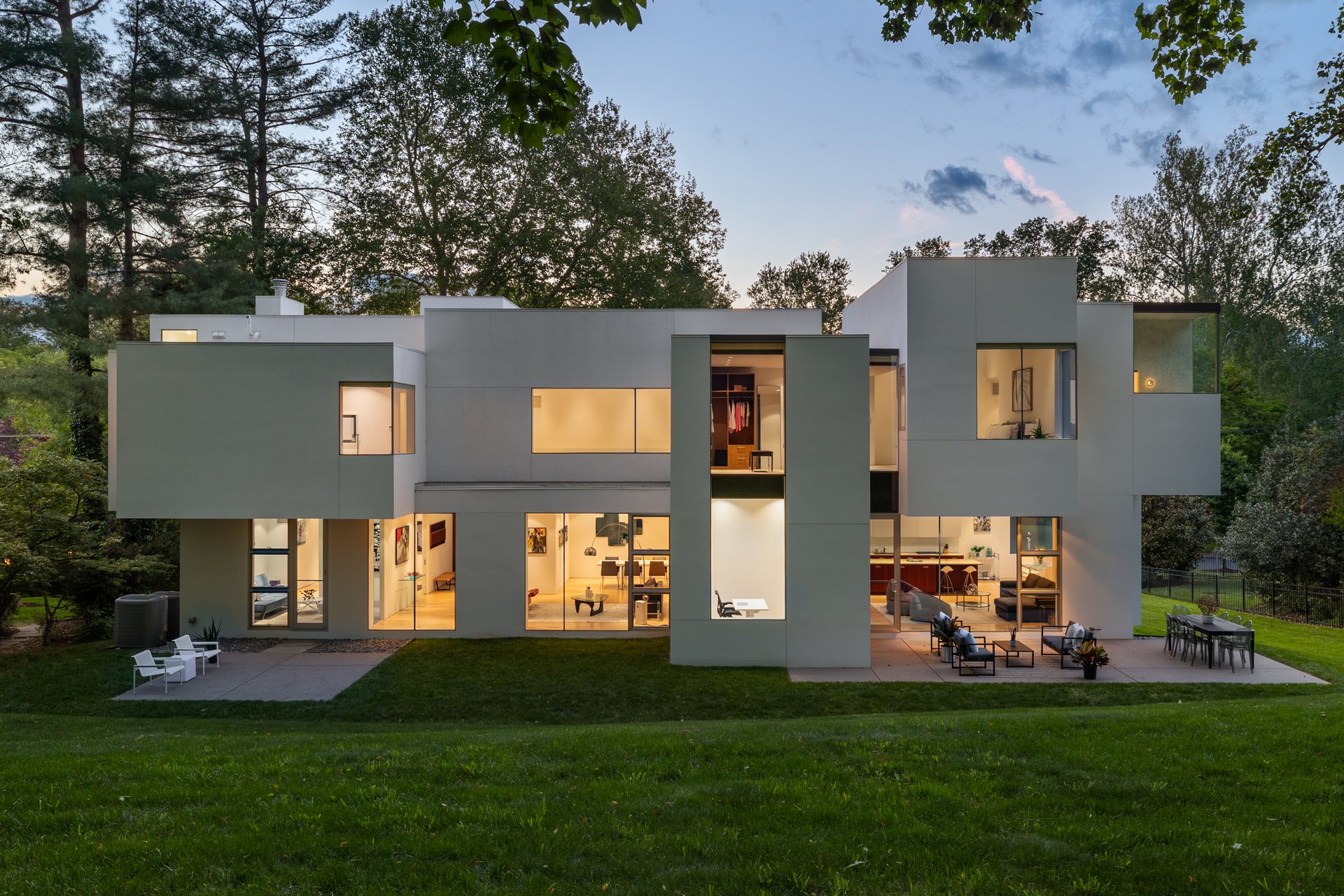
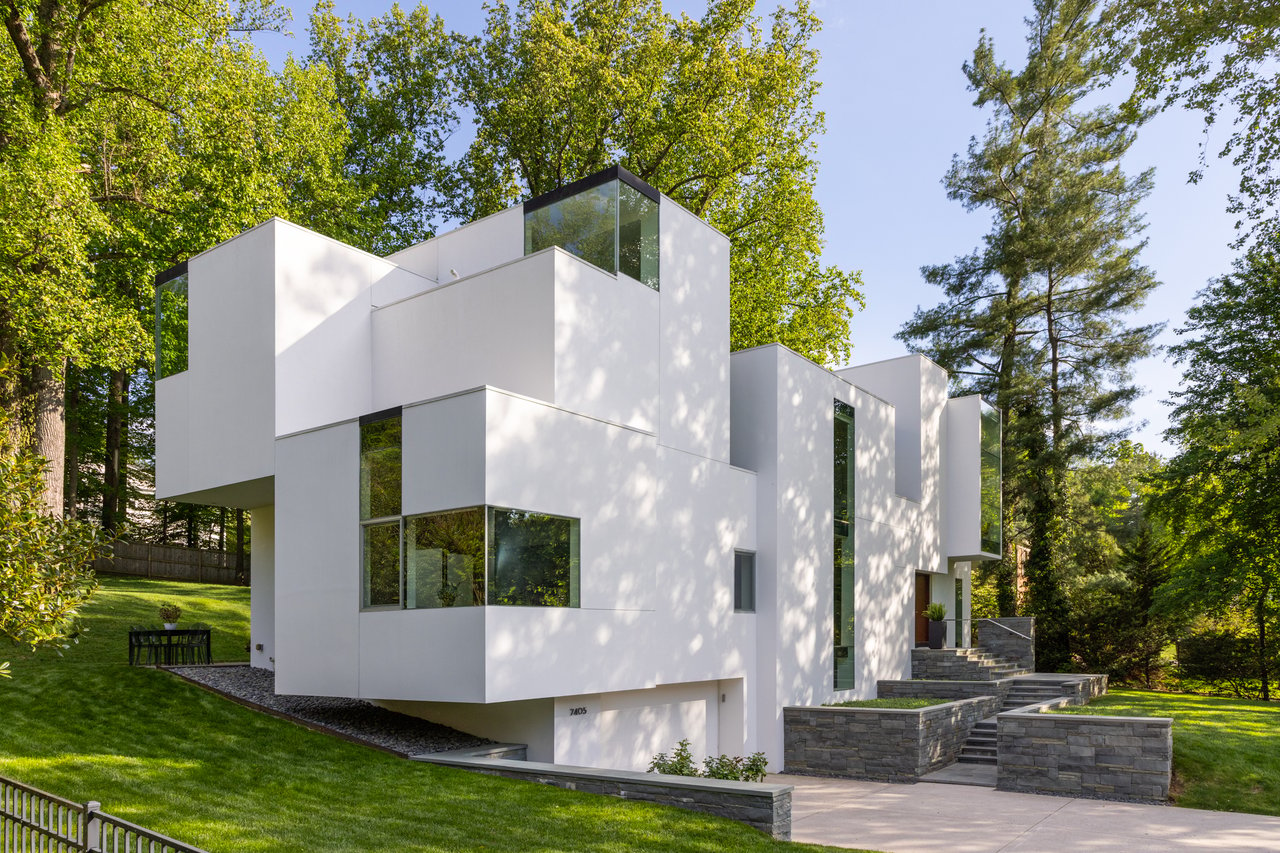
Designed by Washington architect David Jameson, the internationally published residence in Bethesda operates somewhere between architecture and perceptual experiment. Its geometry appears unstable at first encounter. Volumes project outward unexpectedly. Openings resist conventional rhythm. Mass and scale become difficult to fully read from any single vantage point.
The name itself offers a clue.
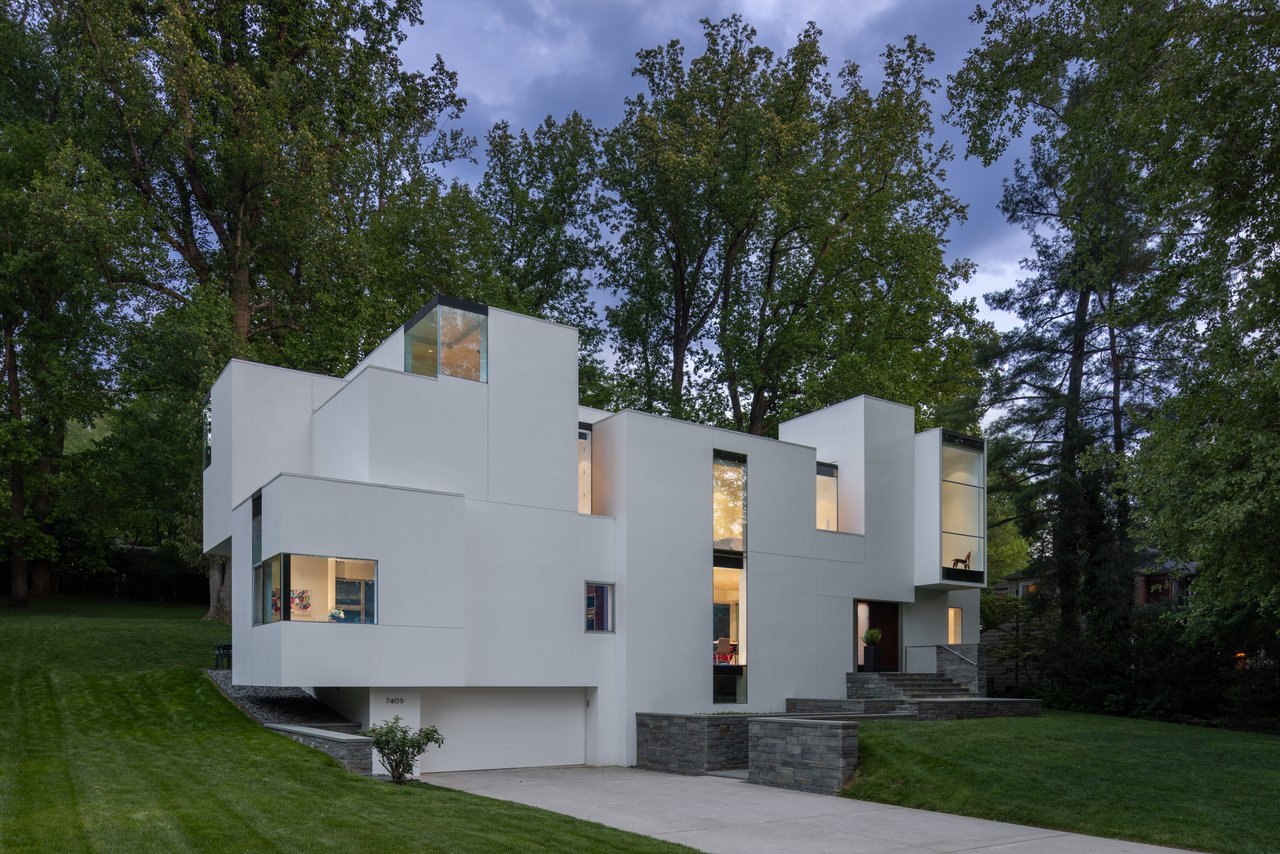
Jameson conceived the house as an abstraction of mineral rock salt, referencing the imperfect crystalline formations found in nature rather than the clean repetition typically associated with modernist residential design. The resulting composition feels simultaneously monolithic and fragmented, precise yet irregular.
From the street, the structure appears to hover within the wooded site. Cantilevered forms extend dramatically beyond their apparent support, while flush glazing minimizes shadow lines and further destabilizes the reading of scale. The house avoids the visual heaviness common to large contemporary construction, despite encompassing nearly 6,000 square feet across three levels.
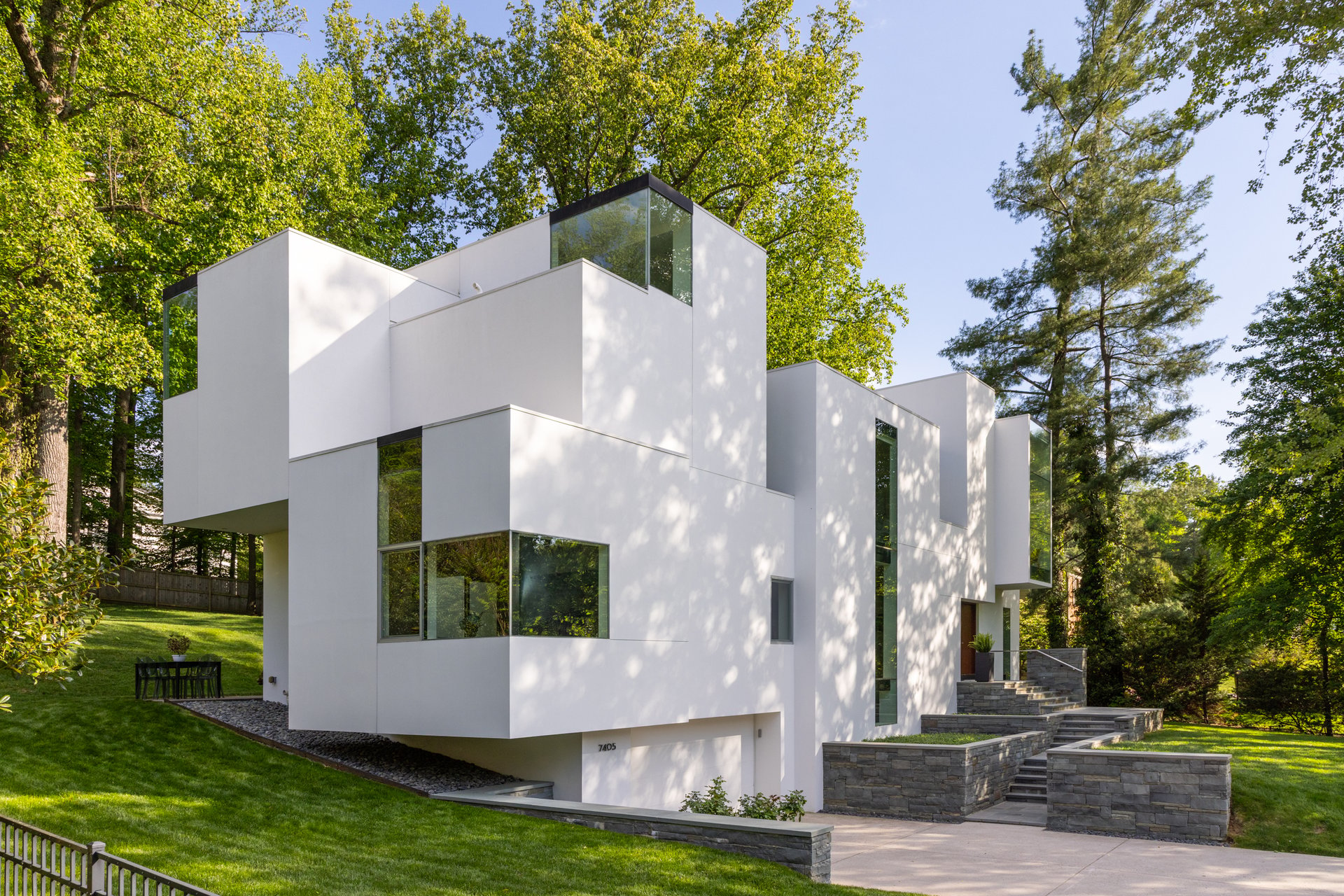
What distinguishes the project, however, is not formal expression alone.
The geometry is disciplined. Every projection alters light. Every opening reframes proportion. Spatial compression and release are calibrated continuously through movement within the house itself.
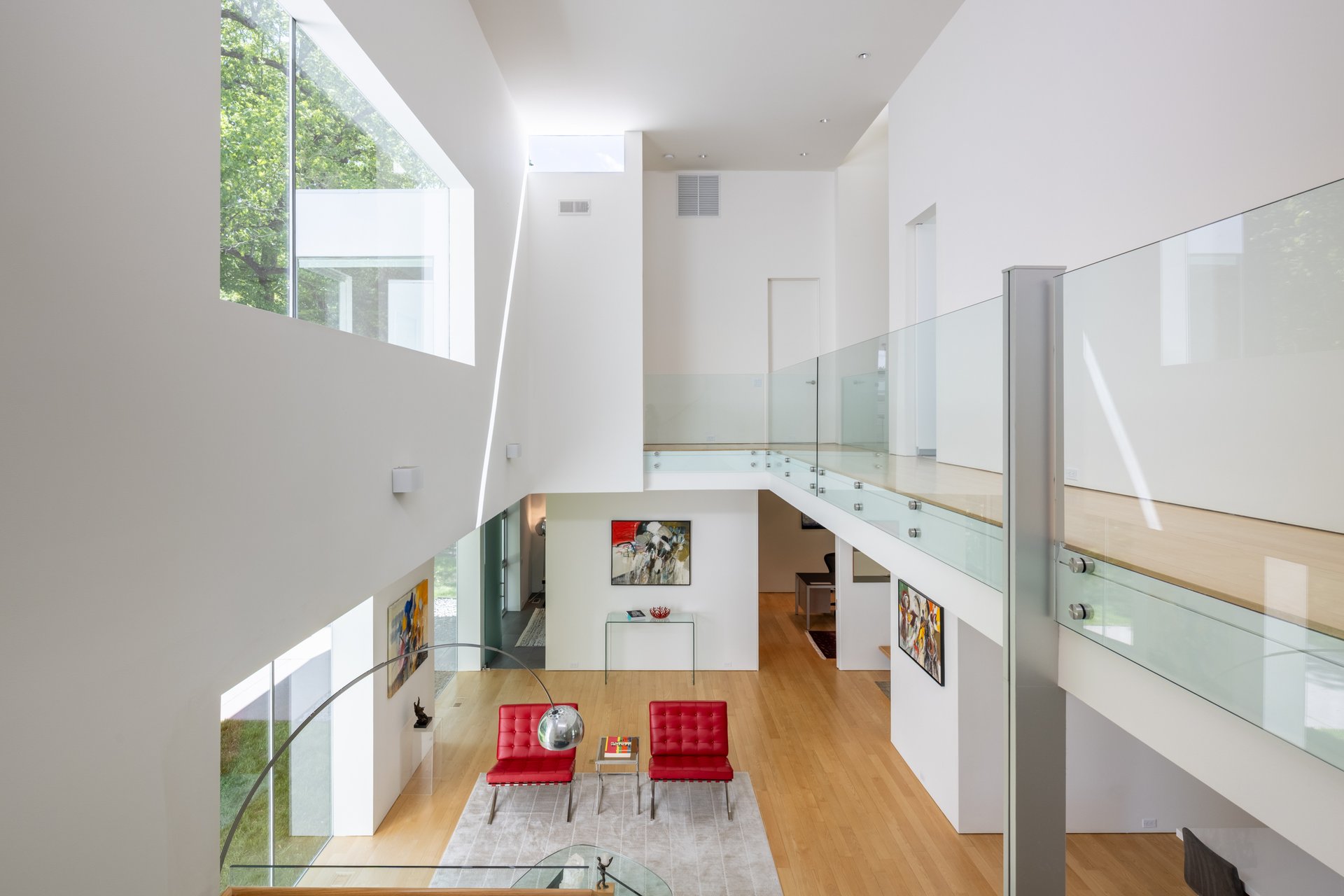
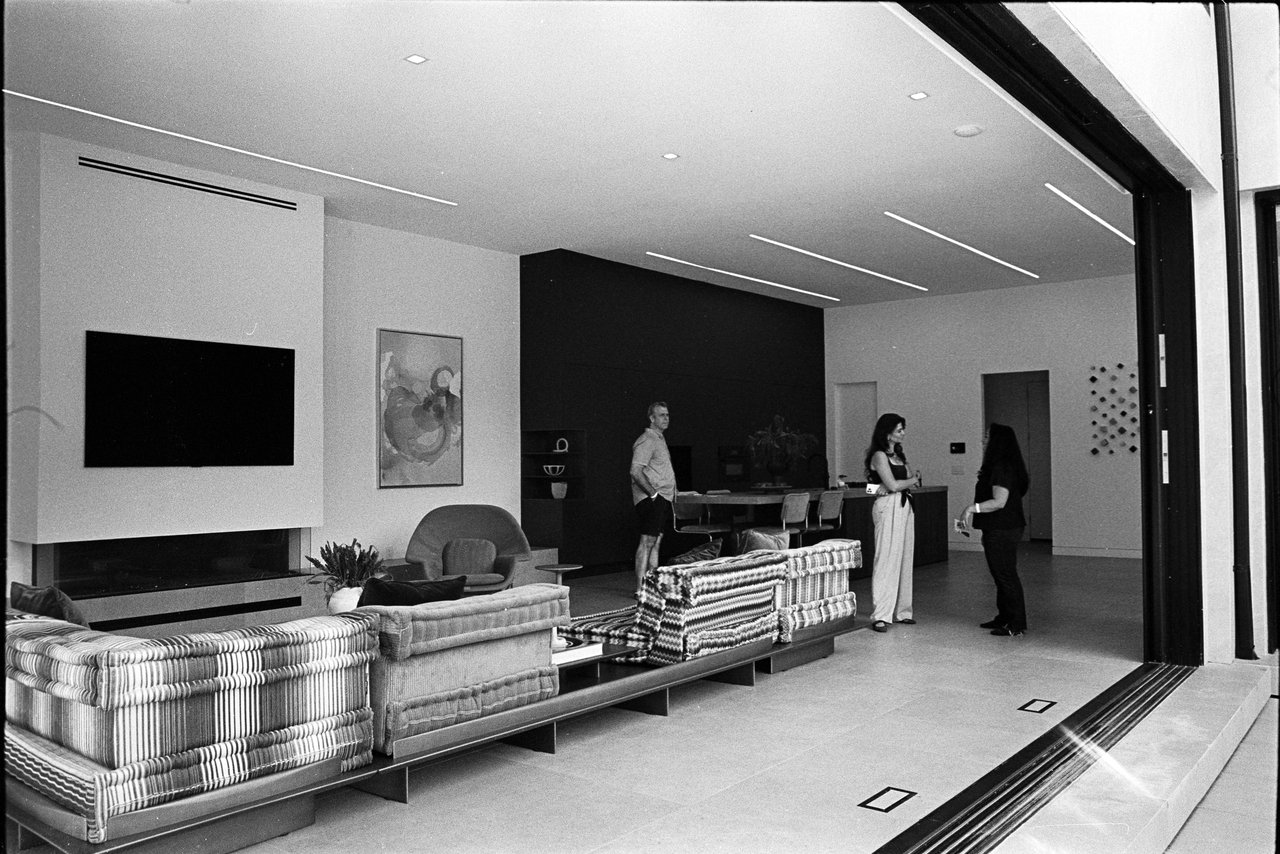
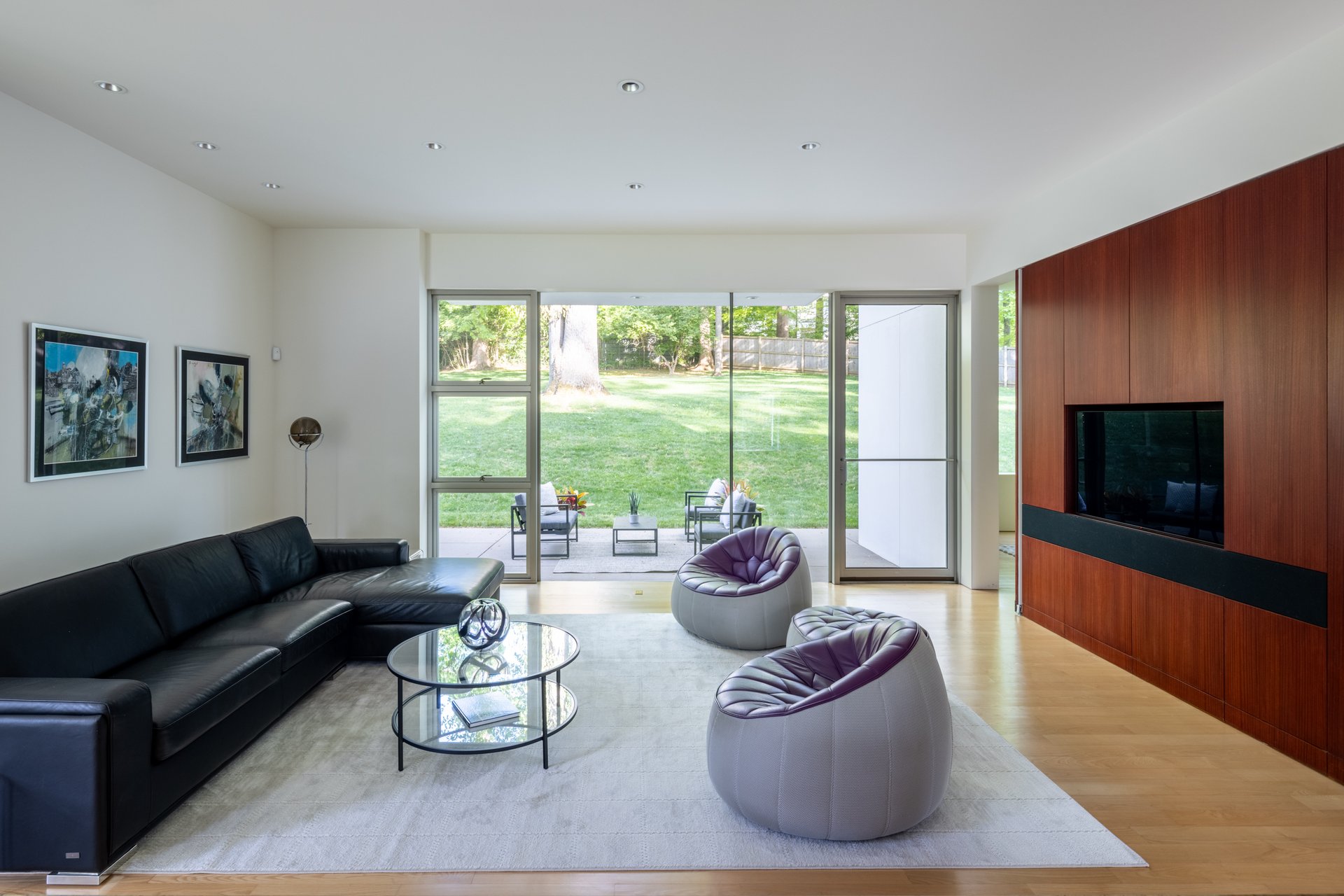
Inside, double-height living volumes create an atmosphere of unusual openness without sacrificing intimacy. Pale hardwood floors and restrained white surfaces amplify natural light, while mahogany millwork introduces warmth and material depth. Glass guardrails and carefully concealed structural transitions preserve visual continuity throughout the interior sequence.
The house rarely reveals an entire room at once.
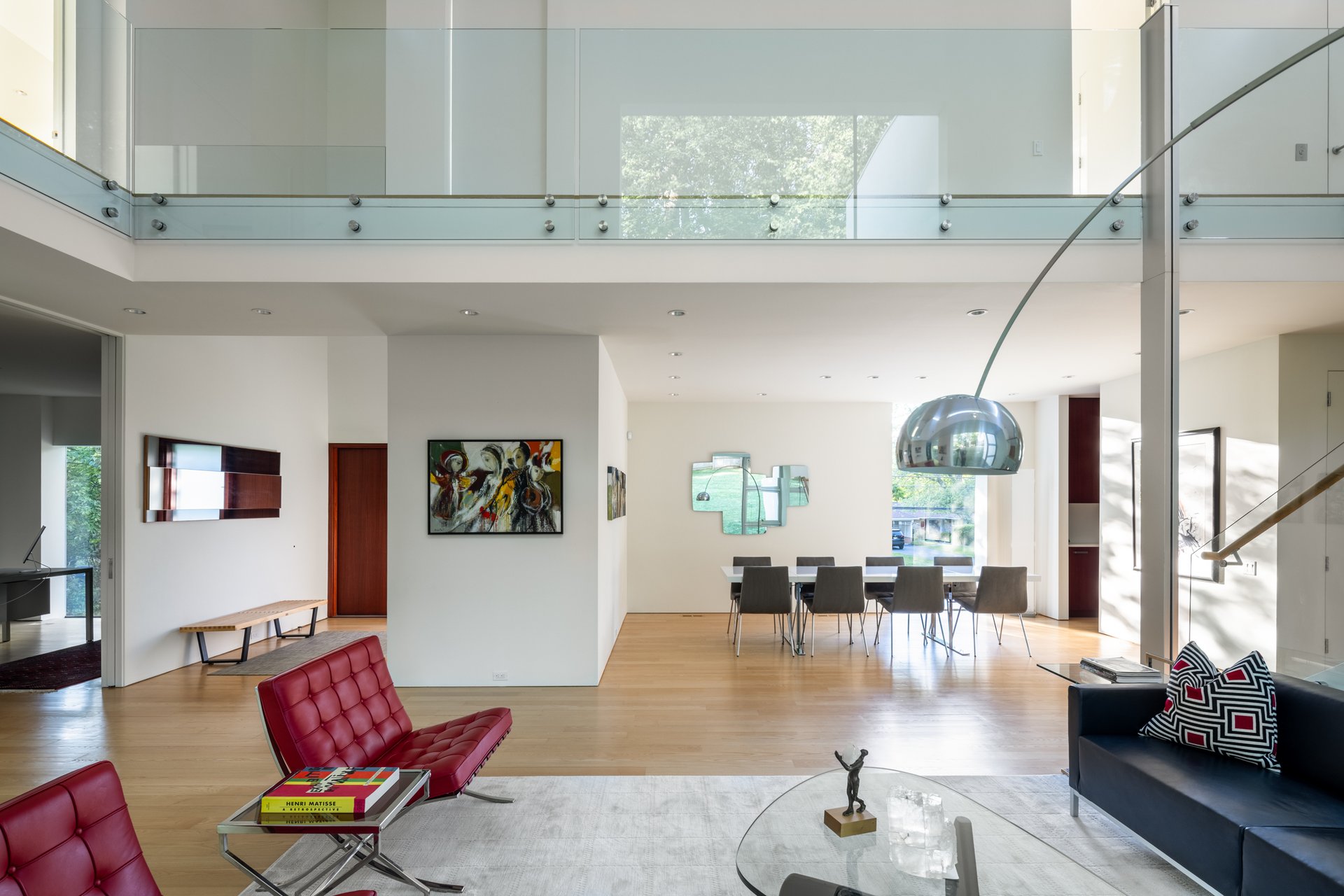
Instead, views unfold incrementally. A stair landing reframes the living volume from above. Light shifts across full-height walls throughout the day. Openings positioned with unusual precision create moments that feel less decorative than cinematic.
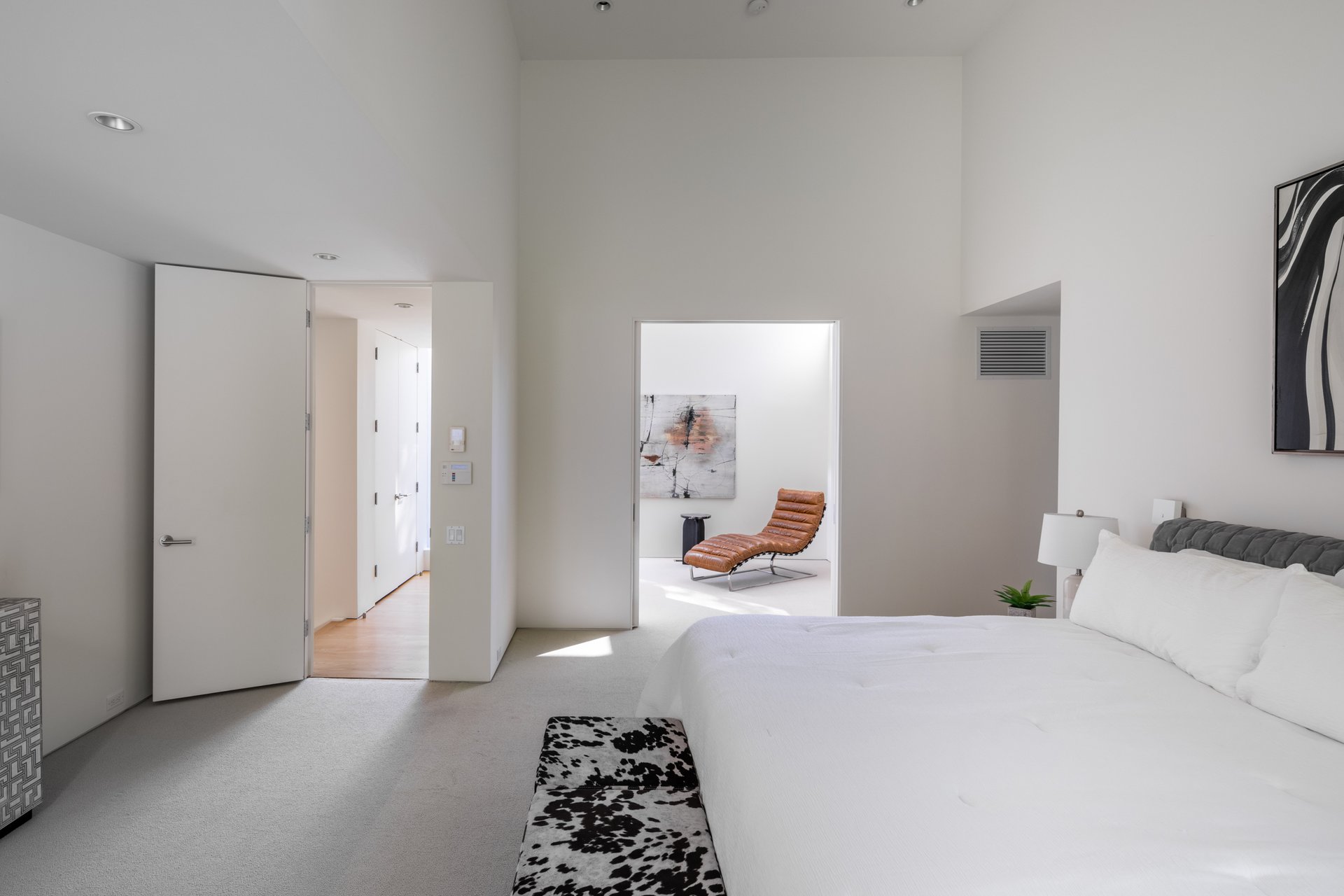
This sense of control extends to the upper level, where four bedrooms are arranged with remarkable clarity and restraint. The primary suite contains some of the residence’s most memorable spatial moments, including a soaring private sitting room and a shower that opens directly toward the tree canopy while remaining completely secluded.
Two dedicated offices on the main level feel particularly relevant now, though the house anticipated this mode of living long before remote work became normalized. Even the elevator, connecting all three floors, feels integrated into the architectural logic rather than appended for convenience.
Jameson’s work has long explored ambiguity, suspension, and perceptual tension, often treating residential architecture less as a static enclosure and more as an active spatial experience. NaCl House may be one of the clearest expressions of that philosophy.
The residence continues to feel current not because it follows contemporary trends, but because it was never designed around them in the first place.
Architecture of this kind resists easy categorization. It rewards attention slowly, through movement, light, sequence, and repeated observation.
And that may be why the house remains so compelling more than a decade after its completion.