By listModern
With insights from Ron Mangas, Jr
Featured Homes
In the Washington region, architect-designed residential work remains surprisingly limited. The area is defined publicly by institutional architecture, yet comparatively few private homes pursue architecture as a disciplined act of authorship. Fewer still maintain that discipline from concept through habitation.
The house at 11604 Fairfax Station Road belongs to that smaller category.
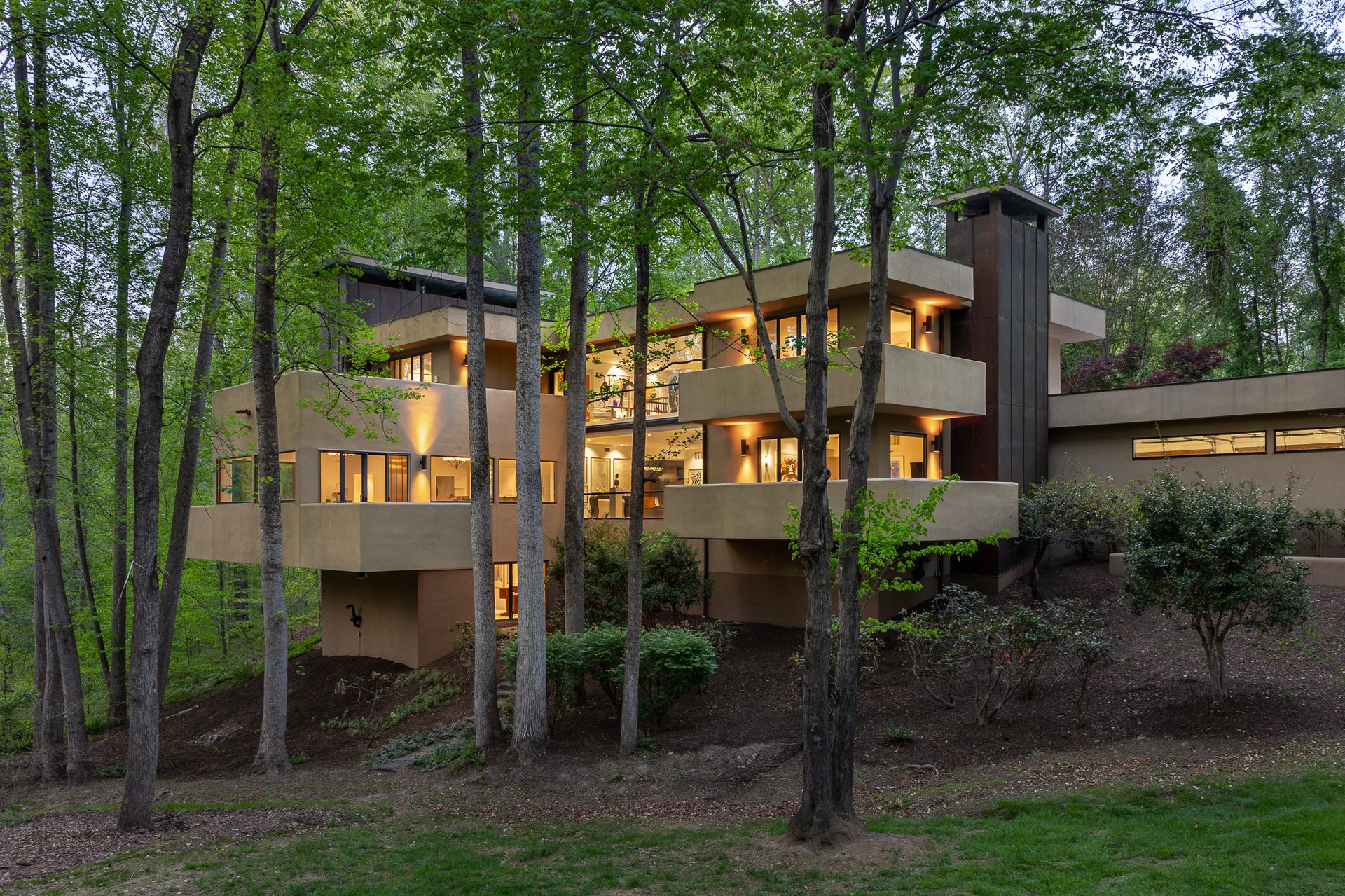
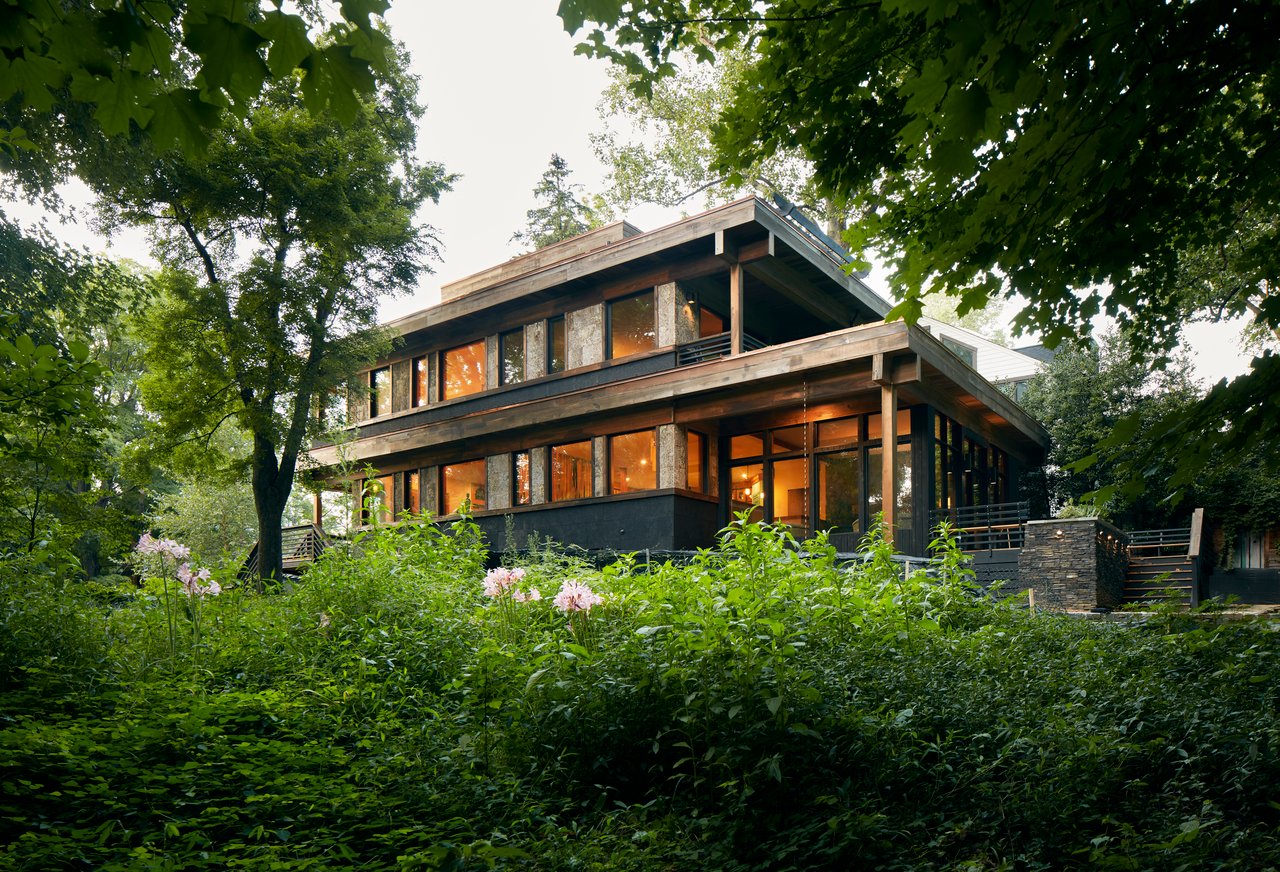
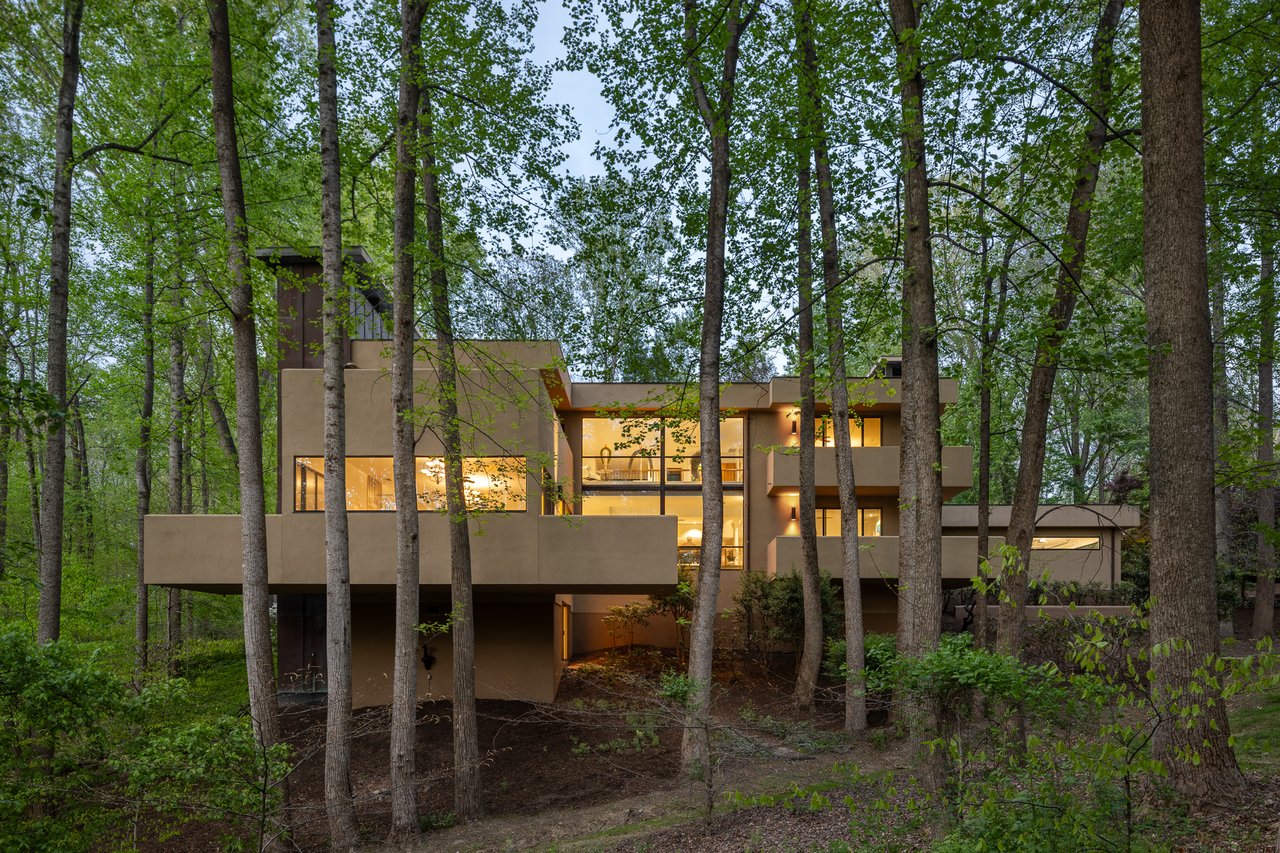
Designed by builder and structural engineer Jack Willmore, the residence studies the relationship between structure, terrain, and restraint. The site itself becomes the organizing device. Rather than occupying the hilltop as an object placed above the landscape, the house is drawn into the natural swale of the property, allowing the topography to determine both massing and sequence. The result is a home that remains visually quiet despite its scale.
There are familiar references within the composition. The extended horizontal planes, layered cantilevers, and integration with the wooded site inevitably recall aspects of mid-century organic architecture, particularly the spatial confidence associated with Frank Lloyd Wright’s later work. Yet the house avoids imitation. The references operate more as lineage than quotation.
What distinguishes the project is its clarity of control.
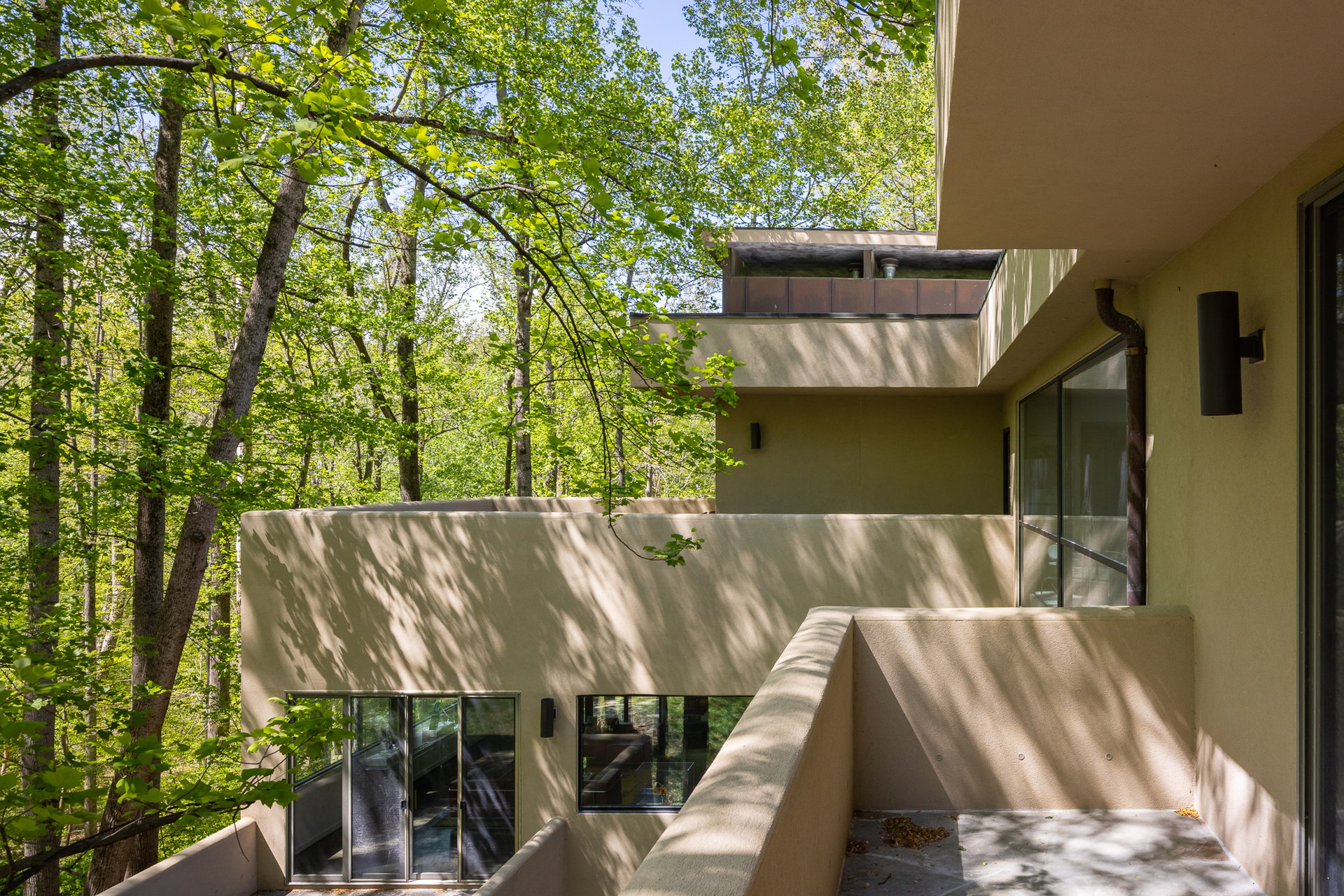
The exterior relies on proportion and shadow rather than ornament. Horizontal bands compress and release as the structure moves along the hillside. Deep overhangs temper light while reinforcing the building’s relationship to grade. Materials remain subdued, allowing the geometry and site positioning to carry the architectural weight.
Inside, the atmosphere shifts noticeably.
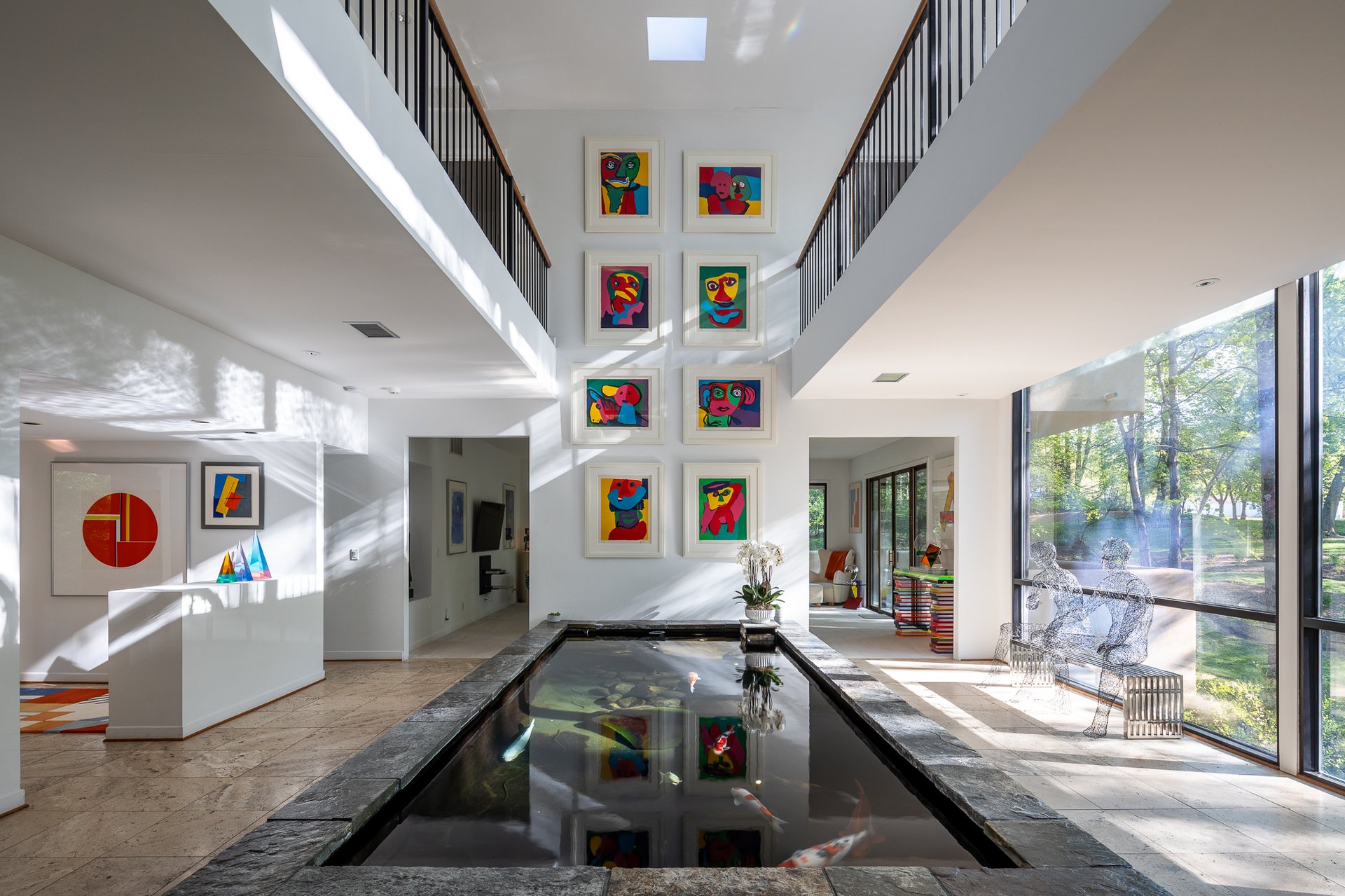
Where the exterior feels geological and grounded, the interior becomes ordered, open, and unexpectedly light. Circulation centers around a two-story gallery anchored by a koi pond. In less disciplined hands, the gesture could have become theatrical. Here, it functions architecturally. Reflected light from the water softens the surrounding surfaces throughout the day, while the sound of the fountain establishes a low acoustic continuity across the house.
The pond is not a decoration attached to the architecture. It is part of the home's environmental system.
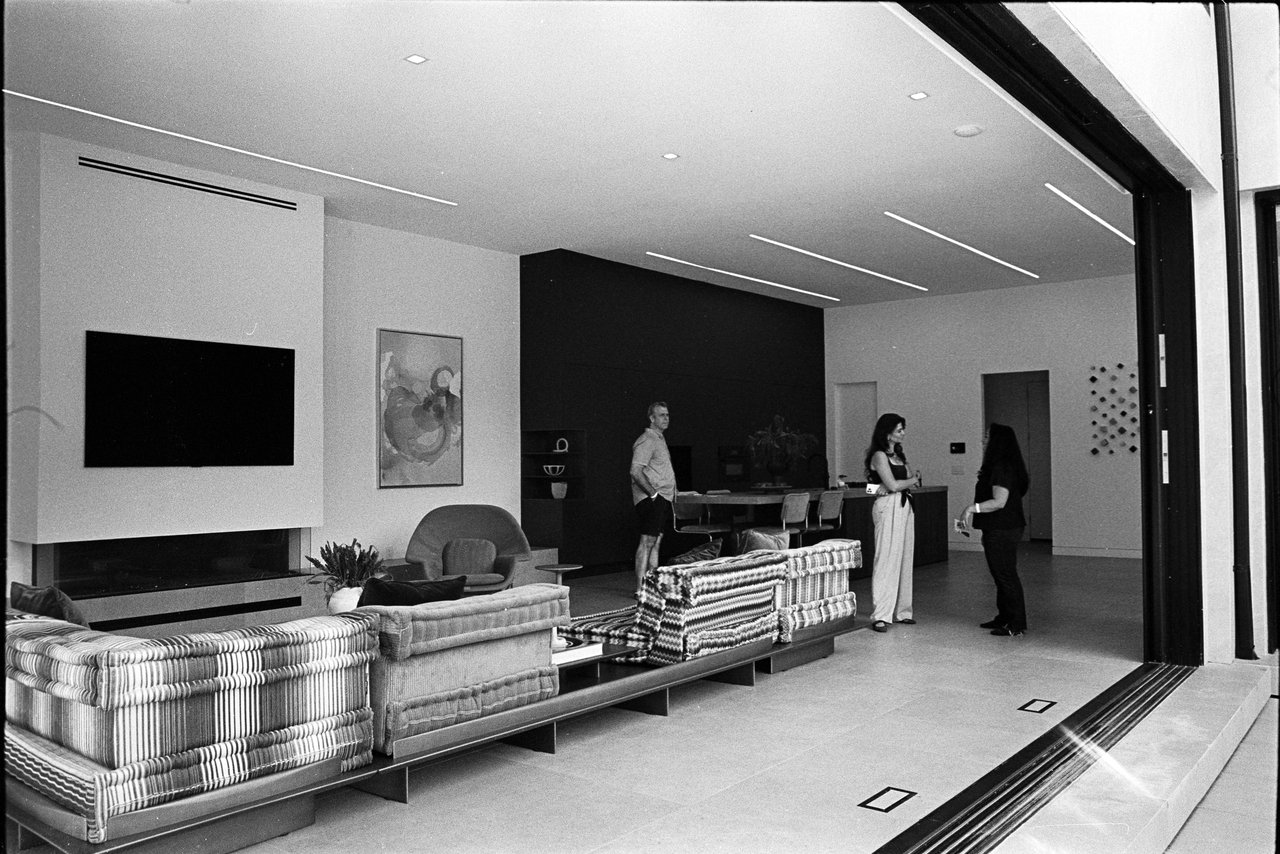
That integration of sensory experience continues throughout the residence. Operable screens and large openings allow air movement and exterior sound to remain present inside the interior volume. Wind through the trees, water movement, filtered daylight, and long sightlines work together without demanding attention individually. The house maintains a rare sense of calm despite the complexity of its structure.
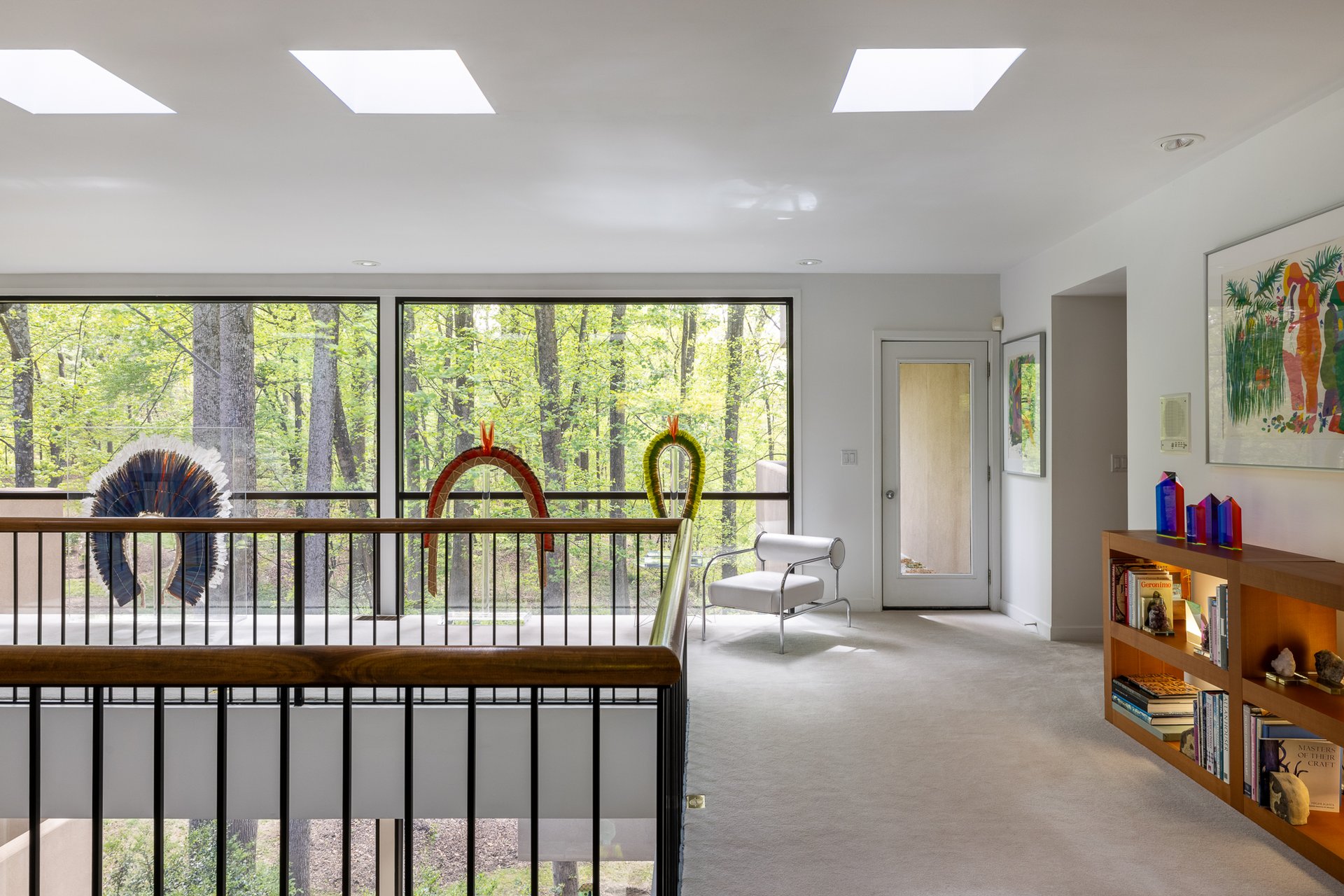
Importantly, the architecture never asks the occupants to sacrifice domestic ease for conceptual ambition.
Many contemporary architect-designed homes prioritize image over inhabitation. Spatial gestures become dominant in daily life. This residence avoids that imbalance. The planning remains highly livable, even as the architecture maintains strong formal discipline. Rooms connect naturally. Scale is controlled. Compression and openness are calibrated rather than exaggerated.
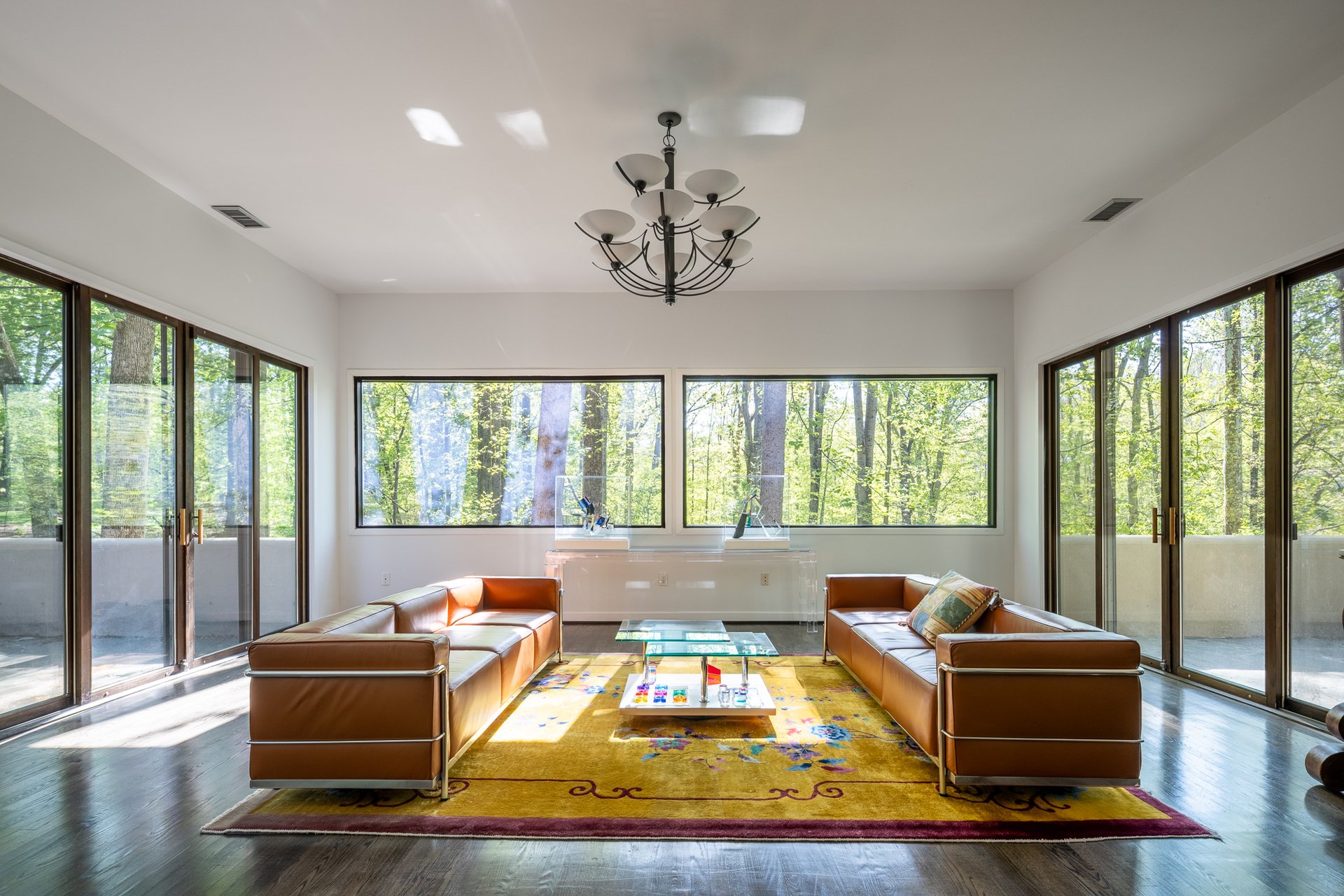
That restraint may be the home’s most defining quality.
The property does not announce itself from the road. It remains partially concealed within the landscape, experienced gradually rather than immediately. In a market where visibility often substitutes for architectural confidence, the decision feels intentional. The house was not designed for constant exposure. It was designed for sustained occupation.
Fairfax Station reinforces that condition. Unlike denser suburban environments shaped primarily by frontage and proximity, this area still allows architecture to engage the land directly. Large wooded parcels create distance, privacy, and topographic variation uncommon within reach of Washington. For architecturally ambitious residential work, those conditions matter. They allow houses to establish an atmosphere through site relationship rather than enclosure alone.
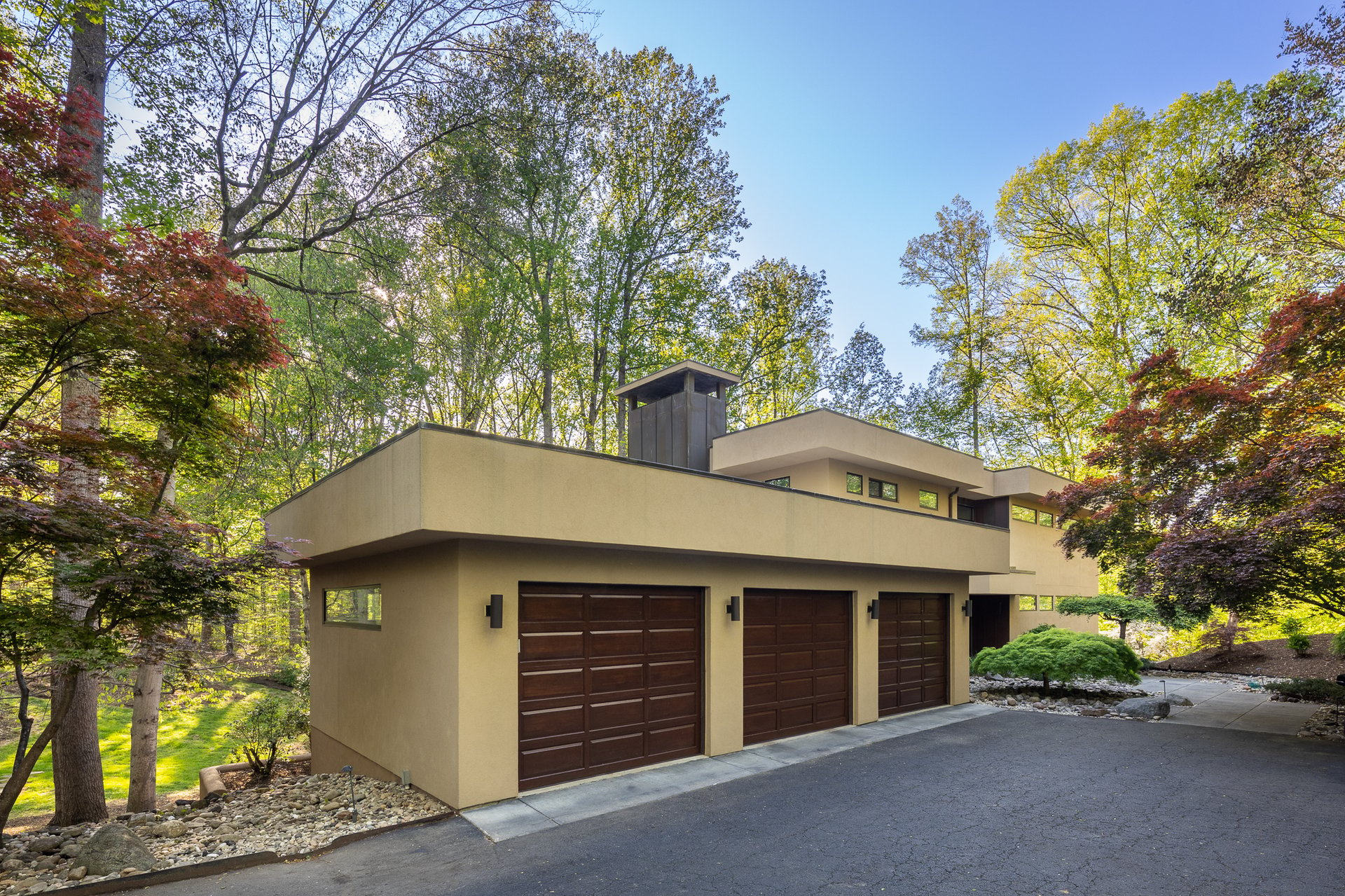
What emerges at 11604 Fairfax Station Road is not a performance of modernism, nor an attempt to replicate historical precedent. The house studies architectural lineage while remaining specific to its own terrain, authorship, and experience.
That distinction is increasingly uncommon.
Architecture becomes memorable not through excess, but through control. This house understands the difference.