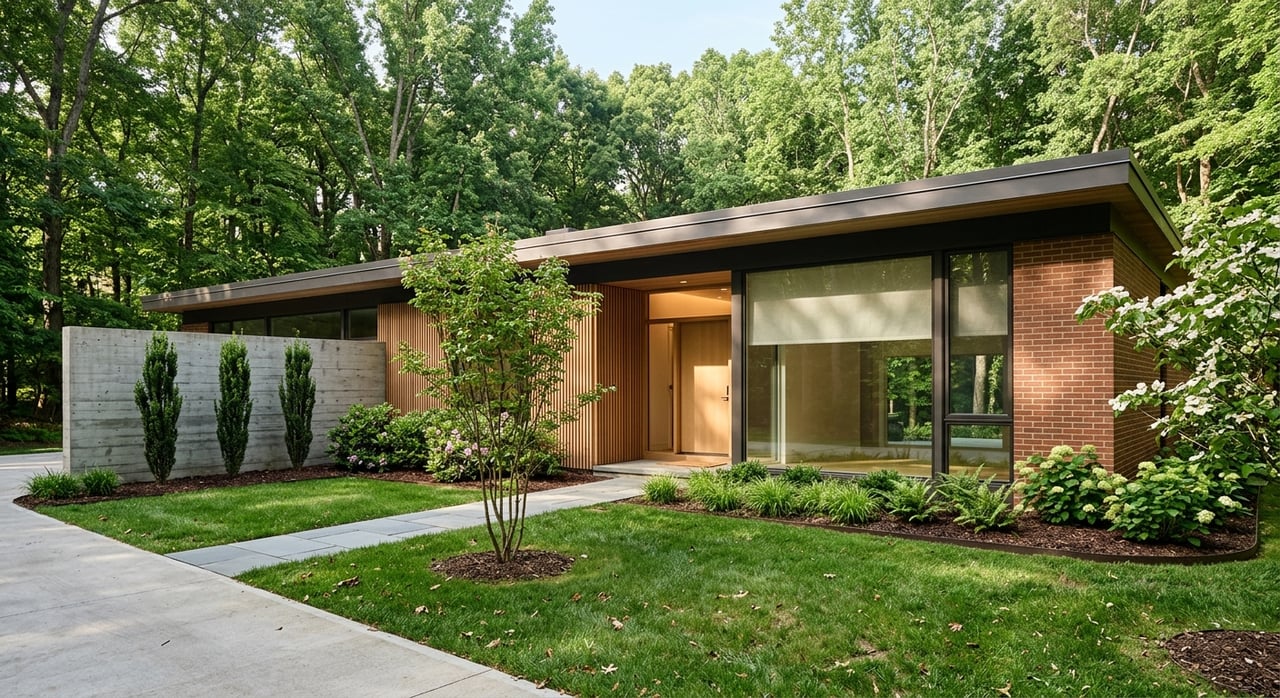
If you are searching for a modern home in Potomac, you are not looking at a one-note market. Potomac offers space, privacy, and a distinctly green setting, but truly modern and contemporary homes are more specialized here than many buyers first expect. Understanding where modern design shows up, what forms it takes, and how Potomac compares with nearby areas can help you search more strategically. Let’s dive in.
Potomac’s housing market at a glance
Potomac is a house-oriented market defined by large homes and high owner occupancy. Maryland planning data shows that 71.4% of the housing stock is detached single-family, while only 12.2% is in buildings with 20 or more units. That gives Potomac a very different feel from denser nearby suburbs.
The homes themselves also tend to be large. Median room counts are above 9.0, and 70% of homes have four or more bedrooms. For you as a buyer, that often translates into generous floor plans, larger suites, and space for offices, guest rooms, or flexible living areas.
Potomac also sits in an upscale price range. U.S. Census QuickFacts places the median value of owner-occupied housing units at $1,157,000, with median selected monthly owner costs above $4,000 for homes with a mortgage. In practical terms, modern-home buyers here are usually shopping in a market where land, setting, and scale all carry meaningful value.
What “modern” means in Potomac
In Potomac, modern architecture is not the dominant style across the whole community. The area’s housing stock is concentrated in homes built from the 1960s through the 1980s, and only about one in ten housing units were built in 2000 or later. That means true new construction exists, but it is still a relatively small slice of the market.
Montgomery Planning’s Montgomery Modern program frames local modernism as a postwar architectural story, especially from the late 1940s through the 1960s. In Potomac, that usually means modern homes appear in specific enclaves or as scattered standout properties rather than as a broad, neighborhood-wide condition.
For buyers, this matters. Your search will often be less about picking any part of Potomac and more about identifying pockets where modern design intent, site planning, and architectural consistency are strongest.
Modern enclaves to know
Potomac Overlook
Potomac Overlook is one of the clearest and most important modern precedents in Potomac. Built from 1956 to 1959, this 19-house enclave was designed to work with the land rather than flatten it. Montgomery Planning identifies it as the county’s first Mid-Century Modern historic district.
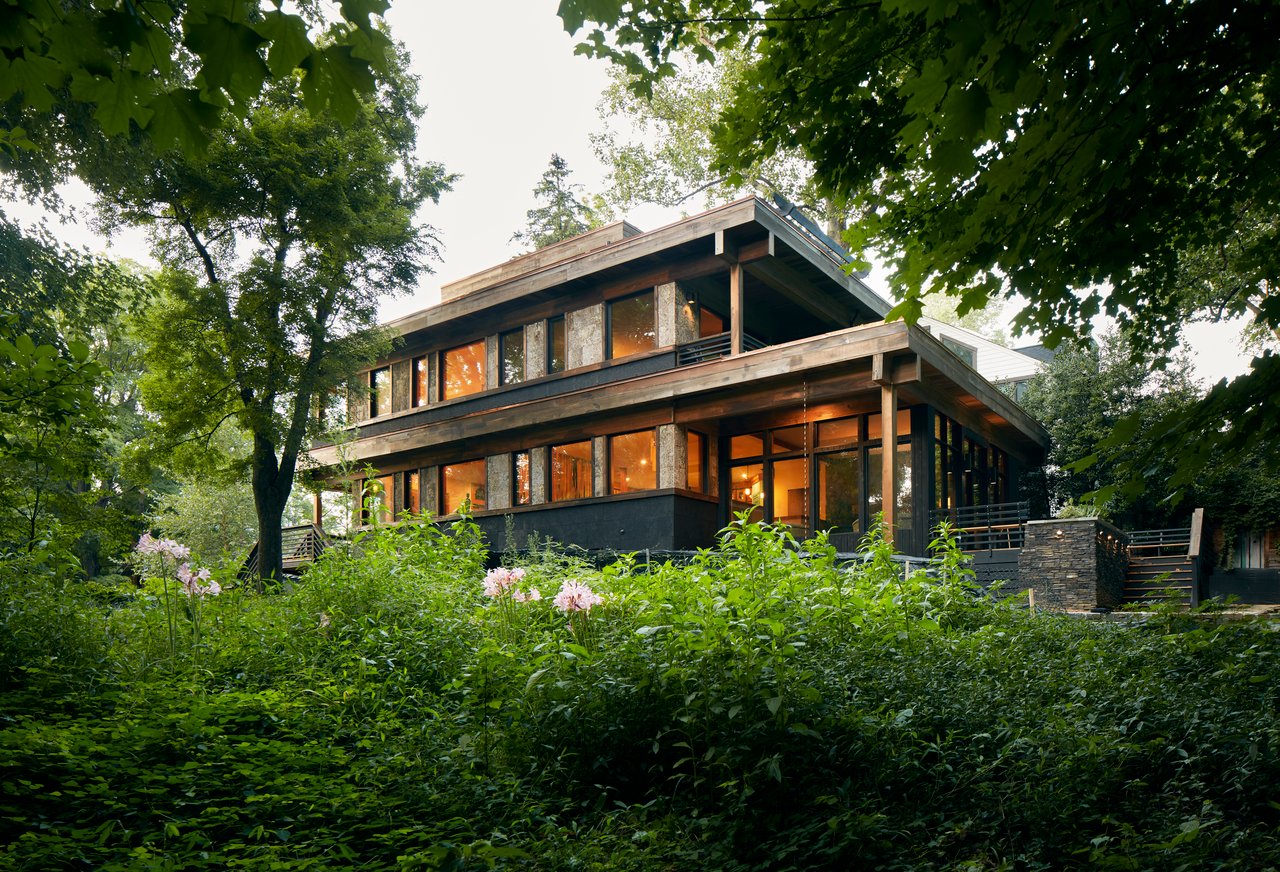
The setting is a major part of the appeal. The homes sit on wooded, sloping lots with secluded cul-de-sacs, crisp geometric detailing, and views tied to the Potomac River valley. If you are drawn to original mid-century modern design with preservation significance, Potomac Overlook stands out.
The Hilltop
The Hilltop offers another modern-leaning residential pattern. This community includes 32 houses on more than 10 acres, organized around a single curving street with flag lots and shared drives. That layout reflects the site-sensitive planning many design-focused buyers appreciate.
While smaller in profile than some better-known modern neighborhoods in the region, The Hilltop helps illustrate how Potomac’s contemporary housing story often ties architecture to land, privacy, and careful placement.
Potowmack Preserve
Potowmack Preserve represents a larger modern-era community in Potomac. It includes 159 houses designed by Cohen, Haft & Associates and built over a three-year period starting in 1970. For buyers who want a neighborhood with a clearer concentration of contemporary design, this is one of the more relevant Potomac examples.
Its significance is not just in the number of homes. It also shows that Potomac’s modern housing story extends beyond boutique mid-century enclaves into later planned residential communities with a more unified design approach.
Why Potomac feels different on the ground
Potomac’s planning context helps explain why modern homes here often feel private, landscape-driven, and calm. The Potomac Subregion Master Plan describes the area as having evolved from rural and agricultural land into a semi-rural and suburban subregion while retaining much of its green character. Environmental quality remains central to future development decisions.
Montgomery Planning’s 2024 reality check also notes that large residential lots, low-density zoning, land values, and infrastructure constraints limit multifamily development. For you, that usually means a market shaped by detached homes, larger parcels, and a lower-density rhythm.
In practical terms, many buyers experience Potomac as wooded, sloping, and land-oriented. Irregular lot lines, cul-de-sac streets, and strong indoor-outdoor relationships are common themes in its more design-forward enclaves. That sense of space is one of Potomac’s defining strengths.
What to expect from the housing stock
If you are hoping for a large inventory of newly built modern homes, Potomac may require patience. Roughly three-quarters of the housing stock was built from 1960 to 1989, while only a small share dates to 2000 or later. The market is more likely to present renovated homes, architecturally distinctive resales, or occasional newer custom properties than a steady flow of new builds.
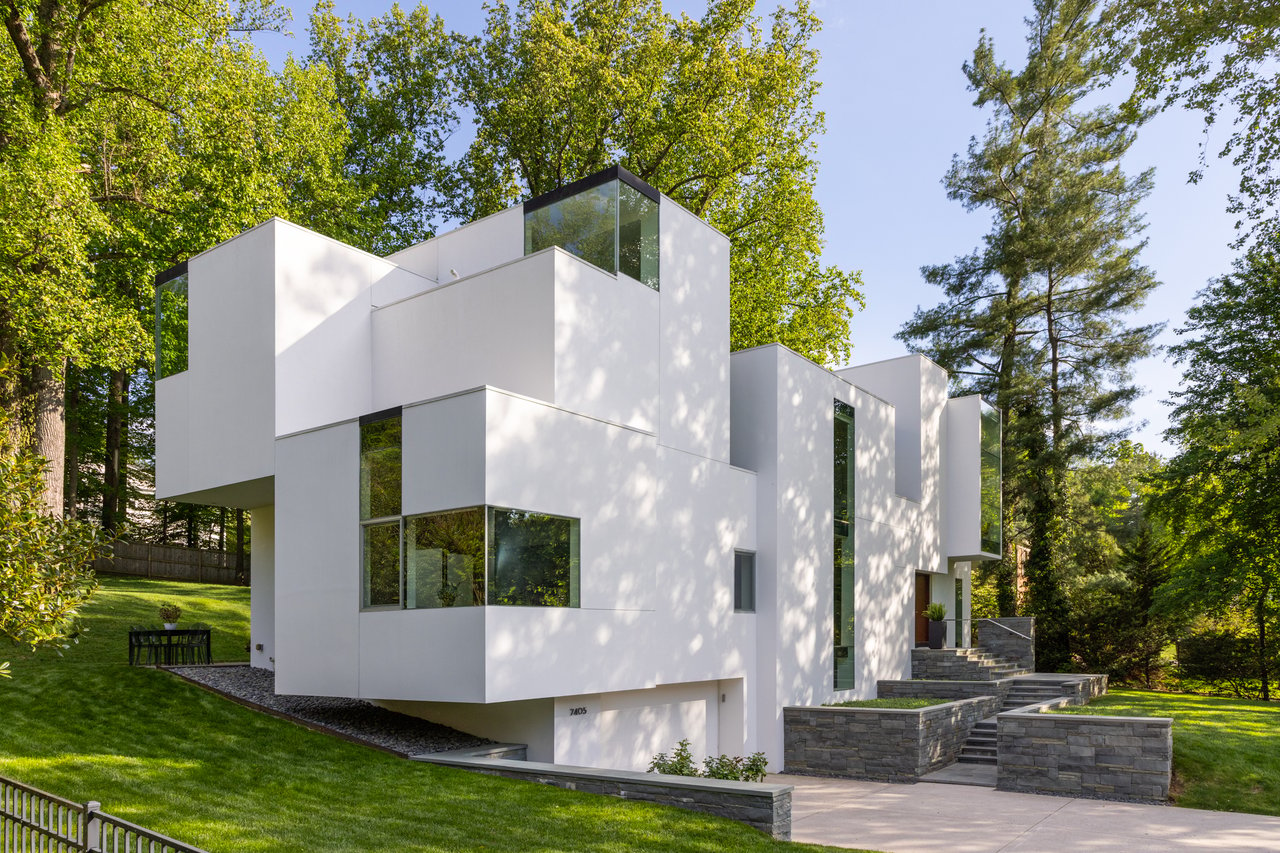
That said, the age of the housing stock can be part of the appeal. Large footprints and established lots often create opportunities for thoughtful updates, additions, or reimagined interiors, especially if you value architecture that connects to the landscape. The key is knowing whether you want original design pedigree, a later contemporary home, or a newer interpretation of modern living.
Potomac vs. nearby areas
Many buyers looking at Potomac are also considering Bethesda, North Bethesda, Chevy Chase, or nearby modernist pockets. The differences are important because each area offers a distinct product type.
Potomac vs. Bethesda
Bethesda is more mixed and denser than Potomac. Maryland planning data shows that 52.9% of Bethesda’s housing is detached single-family, while 38.0% is in buildings with 20 or more units. Its median room count is 6.5, which is meaningfully smaller than Potomac’s.
If you want a larger-lot modern home with a more private setting, Potomac is often the stronger fit. If you prefer a denser housing mix and more compact living patterns, Bethesda may feel more aligned with your search.
Potomac vs. North Bethesda
North Bethesda reads as even more urban in character. Only 26.7% of its housing stock is detached, while 42.6% is in 20+ unit buildings, and the median room count is 4.5. That is a very different housing profile from Potomac.
For a buyer prioritizing architecture on substantial land, these differences matter. North Bethesda can offer a different kind of modern living, but it is not the same experience as searching for a design-driven house in a wooded Potomac setting.
Potomac vs. Chevy Chase
Chevy Chase town is almost the reverse of a modern-new-build search. Its housing stock is fully detached, but 66.7% of homes were built before 1940. That gives it an older and more traditional profile overall.
If your focus is contemporary design language or mid-century modern architecture, Potomac generally offers a more relevant landscape than Chevy Chase town. The appeal here is less about historic traditional homes and more about site-sensitive postwar and later modern housing.
Nearby pockets for modern architecture lovers
Sometimes the best Potomac-area search includes adjacent communities with strong modern identity. If you are highly design-focused, it can help to compare Potomac with nearby benchmarks rather than viewing it in isolation.
Carderock Springs
Carderock Springs is the clearest nearby benchmark for a stronger concentration of original modernism. It includes 360 modernist houses built from 1962 to 1966, and Montgomery Planning highlights its curving streets, cul-de-sacs, wooded sloping terrain, and unified design aesthetic.
Compared with Potomac, Carderock Springs offers a more concentrated modernist experience. Potomac, by contrast, tends to deliver a more scattered mix of enclaves and individual opportunities.
Glen Echo Heights
Glen Echo Heights is another nearby pocket worth watching. Montgomery Planning notes that it includes more than 30 mid-century modern houses designed by Donald Lethbridge and his associates between 1957 and 1961. For buyers exploring the broader Potomac-Bethesda corridor, it can be a useful comparison point.
This matters because your best match may not come from a municipal boundary alone. It may come from the architectural concentration, lot character, and design continuity you want most.
Key buyer takeaways
For many buyers, Potomac works best when the goal is a design-conscious house with room to breathe. The area’s housing mix, planning context, and landscape patterns all support a market that feels greener, lower density, and more private than many nearby alternatives.
At the same time, the best modern homes are concentrated rather than widely distributed. You are not shopping a suburb where every neighborhood has a strong modern identity. You are looking for the right enclave, the right site, or the right architecturally distinct resale.
If a home is located in a preserved enclave such as Potomac Overlook or nearby Carderock Springs, exterior changes may be subject to review. Historic designation may also create preservation tax-credit opportunities. For a design-minded buyer, those details can shape both the stewardship and long-term planning of a purchase.
For buyers who value authentic modern architecture, Potomac can be a compelling match. Its strongest offerings combine substantial homes, mature landscapes, and a quieter, land-oriented setting that supports thoughtful design.
If you are exploring modern homes in Potomac or comparing architecturally significant options across the DMV, listModern offers buyer guidance grounded in design literacy, local market knowledge, and a deep appreciation for what makes a modern home worth pursuing.
FAQs
What types of modern homes are most common in Potomac, MD?
- Potomac is dominated by detached single-family homes, and its modern inventory is usually found in select enclaves or standout individual properties rather than across the entire market.
Are there many new construction modern homes in Potomac, MD?
- Not compared with older housing. Only about one in ten housing units in Potomac were built in 2000 or later, so newer modern homes are present but limited.
Which Potomac, MD neighborhoods are known for modern architecture?
- Potomac Overlook, The Hilltop, and Potowmack Preserve are among the clearest examples tied to modern or contemporary design patterns.
How does Potomac, MD compare with Bethesda for modern-home buyers?
- Potomac is more house-centric, larger in scale, and less dense, while Bethesda has a more mixed housing stock with a higher share of larger multifamily buildings.
Should buyers consider historic review in Potomac-area modern enclaves?
- Yes. In preserved enclaves such as Potomac Overlook, exterior changes may be subject to review, which can affect renovation planning and long-term stewardship.