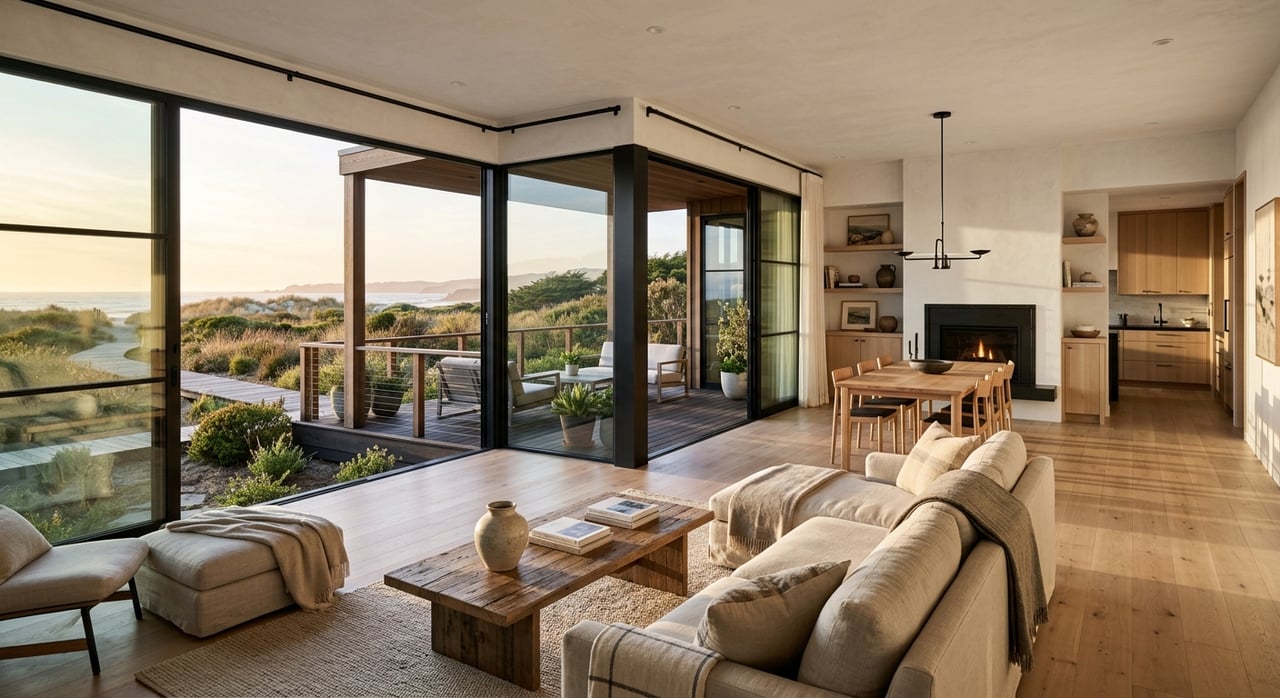
If you picture Maryland’s Eastern Shore as one long beach town, you miss what makes it so compelling. This is a broader coastal region shaped by bays, marshes, rivers, small towns, working waterfronts, and Atlantic-edge beaches, and that mix changes how a well-designed home should live. If you are drawn to modern architecture and coastal settings, the Eastern Shore offers a distinctive case for homes that balance beauty, comfort, and resilience. Let’s dive in.
Why the Eastern Shore feels different
Maryland’s Eastern Shore is a multi-county coastal region that includes Cecil, Caroline, Kent, Queen Anne’s, Dorchester, Somerset, Talbot, Wicomico, and Worcester counties. The landscape is part of Maryland’s Coastal Plain, with low landforms, estuaries, marsh edges, and an irregular shoreline that makes water part of daily life in many settings.
That matters because design here is not just about chasing a beach-house look. The region’s identity includes Chesapeake Bay waters, seafood culture, Atlantic beaches, rural landscapes, pine forests, farmland, streams, and creeks. The result is a coastal lifestyle with more texture, more quiet variation, and more year-round depth than a typical resort market.
Modern design fits the landscape
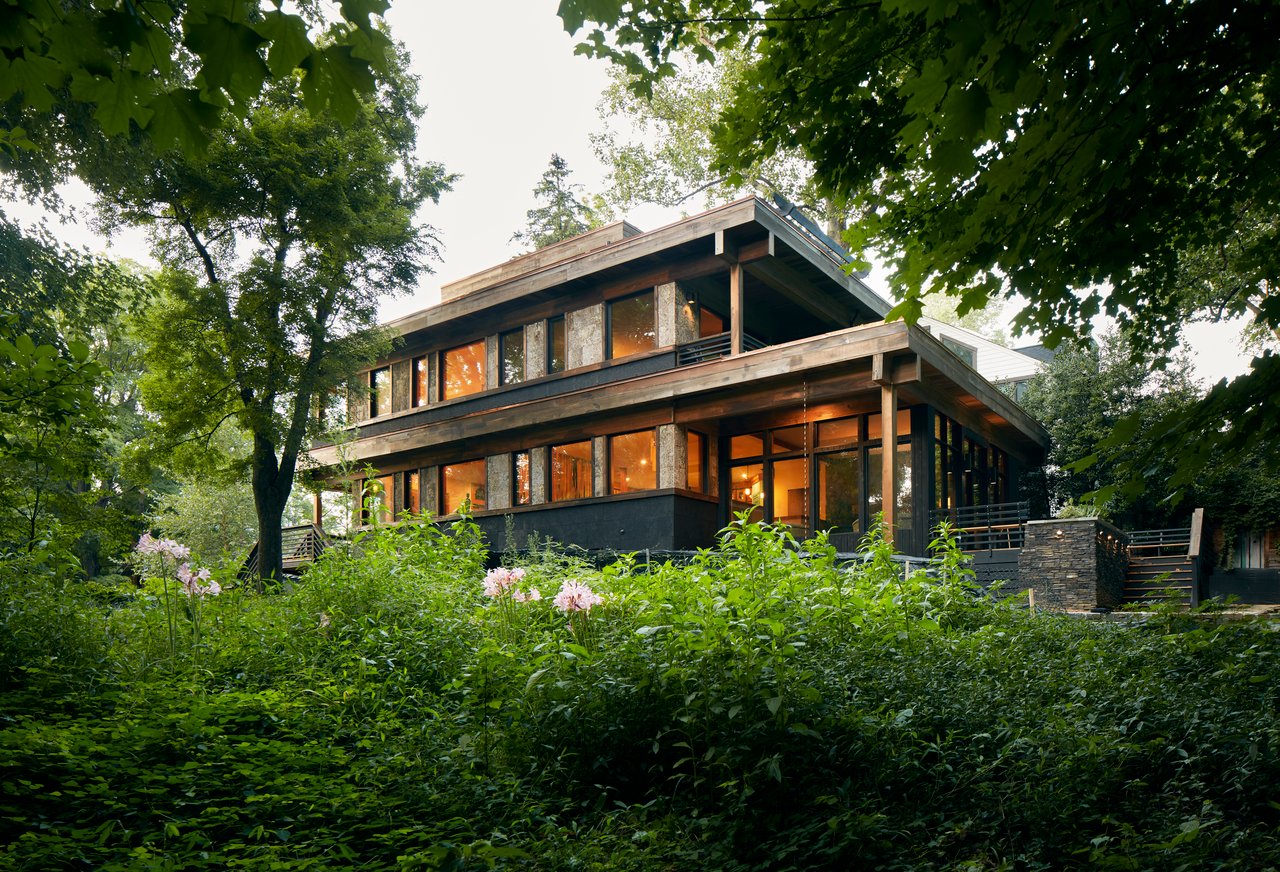
The Eastern Shore’s low horizon and water-shaped geography naturally reward homes with long sightlines, generous daylight, and a strong relationship between inside and outside. In practical terms, that often means architecture that frames views rather than competes with them.
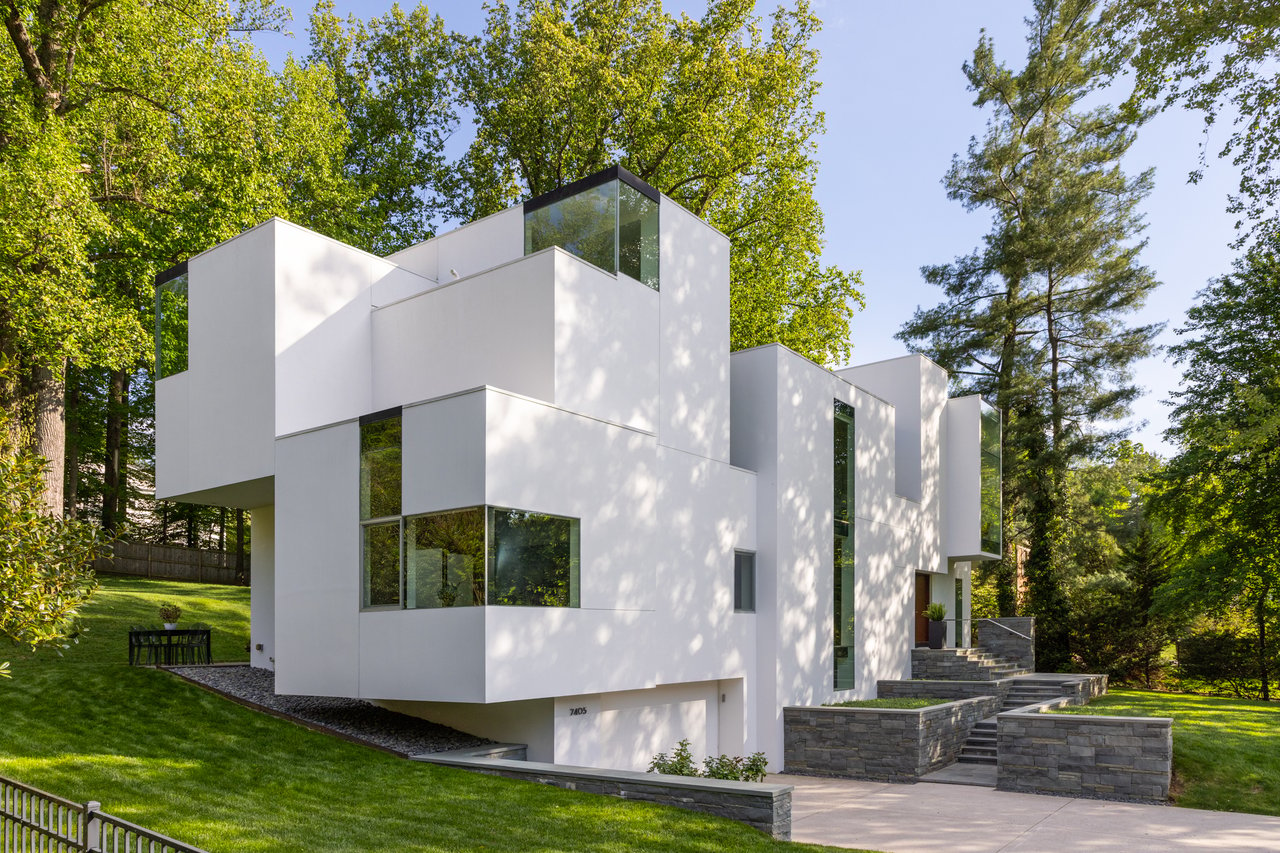
For design-minded buyers and owners, this is where modern homes feel especially at home. Clean lines, open layouts, large windows, and restrained material palettes can make the surrounding marsh, water, sky, and tree line feel more legible and more present.
Light becomes part of the architecture
On the Eastern Shore, broad skies and reflective water change the way light moves through a home. Morning light over a creek, late-day sun across marshland, or shifting cloud cover near the coast can become part of the daily experience rather than just background scenery.
That is one reason modern architecture works so well here. A thoughtful floor plan can pull natural light deep into living spaces and create a calmer, more connected feel throughout the house.
Views work best when rooms flow
Many of the region’s strongest lifestyle moments happen in motion. You move from kitchen to porch, from living room to deck, from mudroom to dock or garden, and back again with wet gear, guests, or dinner on the table.
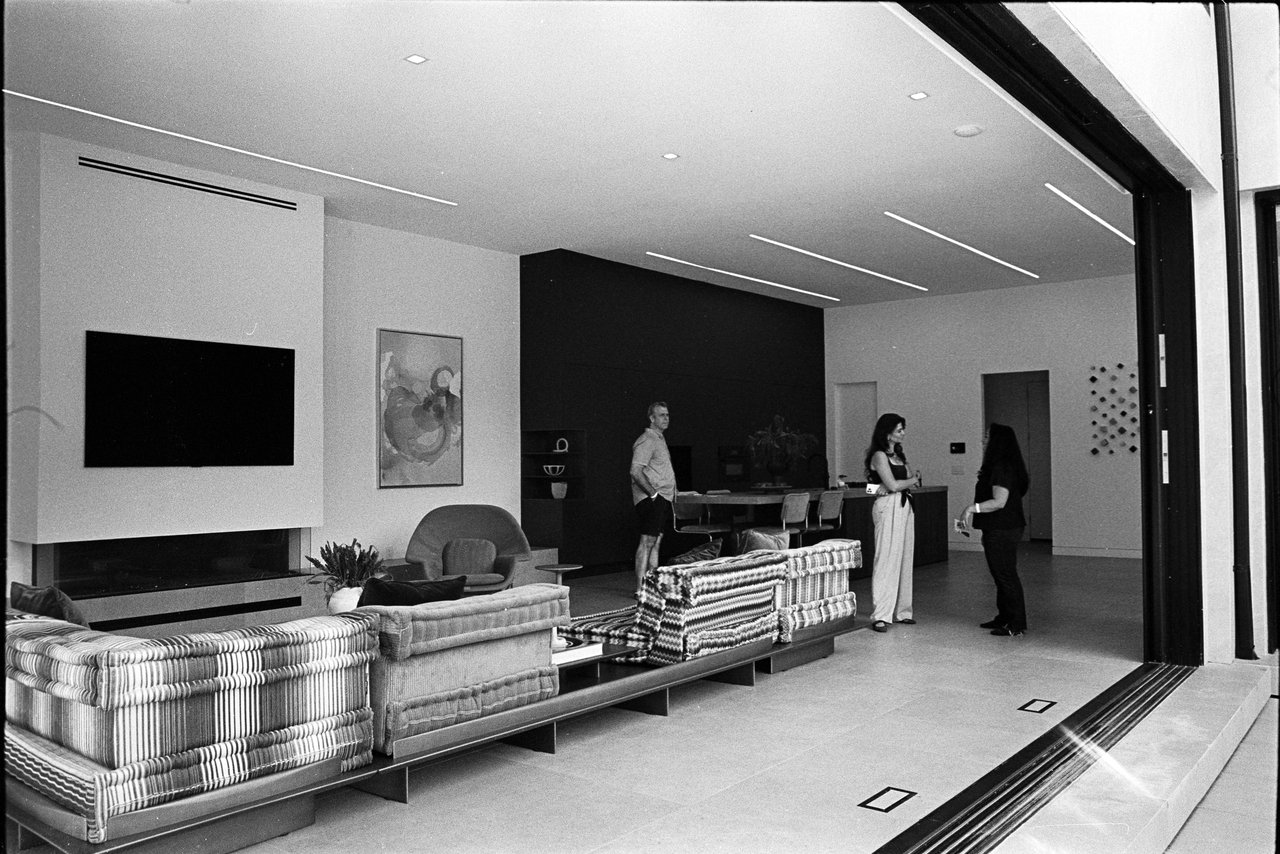
Open-plan entertaining makes sense in that setting. Homes that allow easy circulation and clear visual connections tend to support the kinds of gatherings the Eastern Shore encourages, from casual seafood meals to quiet weekends with friends and family.
Coastal living here is year-round
The Eastern Shore is often associated with summer, but the region supports a genuine four-season lifestyle. Representative NOAA climate normals for Salisbury show average daily temperatures of 38.4°F in January and 79.2°F in July, with an annual mean of 58.7°F.
That range supports more than seasonal use. It allows for homes designed around all-year comfort, whether you are spending time outdoors in warmer months or enjoying water views and natural light through cooler seasons.
The lifestyle extends beyond the beach
The Shore’s appeal includes hospitality, outdoor recreation, Chesapeake waters, and small-town settings, but it also includes wildlife areas, paddling routes, marsh trails, and working landscapes. Places such as Janes Island, Fishing Bay, Smith Island, the Pocomoke River, and Blackwater National Wildlife Refuge reflect how strongly land and water shape everyday life here.
This is part of what gives the region design depth. A home on the Eastern Shore is not only responding to beaches. It may also be responding to marshland, birding routes, rural roads, creek edges, or quiet waterfront communities that feel grounded in the broader landscape.
Community life is broader than tourism
Ocean City draws major visitor traffic, but the wider Eastern Shore is not just a seasonal destination. Maryland Commerce highlights year-round economic drivers such as agribusiness, logistics, aerospace, advanced manufacturing, Salisbury University, and access to NASA’s Wallops Flight Facility.
For buyers, that matters because it reinforces the Shore as a lived-in region, not only a vacation backdrop. Design choices can reflect that reality by prioritizing durability, comfort, storage, and flexible living over purely decorative coastal themes.
Resilience should guide good design
Design-led coastal living is not only about aesthetics. On the Eastern Shore, the best homes also respond to wet conditions, salt exposure, and flood risk with practical, durable choices.
Maryland’s environmental data shows that the Bay area averages about 44 inches of annual precipitation, with eastern regions receiving their highest precipitation in July and August. In some coastal communities, especially in Dorchester and Somerset counties, high-tide flooding is already a regular local planning issue.
Elevated foundations matter
For homes in flood-prone areas, proper elevation is an important planning consideration. Maryland’s climate guidance recommends planning for sea-level rise with proper elevation on new structures, which speaks directly to long-term resilience in low-lying coastal settings.
For design-minded buyers, this does not have to mean compromising architectural quality. In well-executed modern homes, elevation can be integrated into the overall composition so the house still feels refined, intentional, and connected to the site.
Materials should handle moisture and salt
A durable Eastern Shore home should be able to stand up to water, humidity, and corrosive coastal conditions. Flood-resistant building guidance points to elevated foundations, moisture-resistant and corrosion-resistant materials, and assemblies that can dry out more easily after wetting.
In simple terms, the smartest homes here are not fragile. They are designed for repeated use, changing weather, and the realities of coastal ownership.
Shoreline thinking goes beyond the house
For waterfront properties, the site matters as much as the structure. Maryland’s climate guidance recommends living shorelines as one approach that can help reduce erosion and protect habitat, which makes shoreline improvements part of a larger resilience conversation.
That broader view is useful if you are evaluating a property for long-term ownership. A beautiful setting is important, but on the Eastern Shore, a design-led approach should also account for how land, water, and structure work together.
What design-led interiors look like here
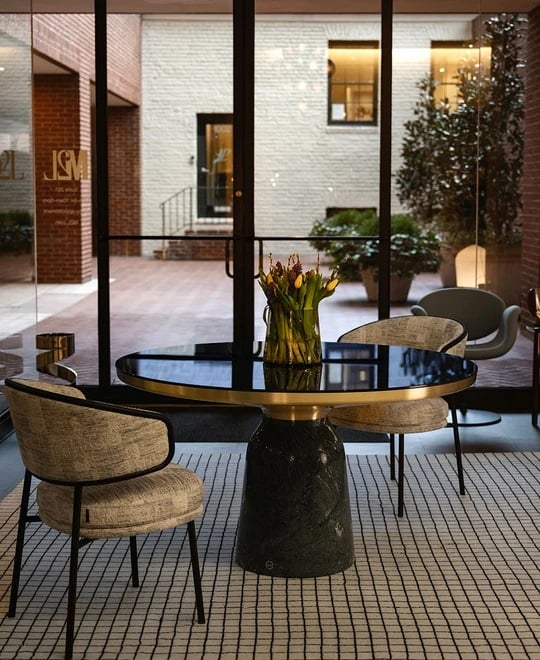
The most successful interiors on the Eastern Shore tend to feel calm, durable, and connected to the landscape. Instead of leaning on clichés, they often draw from the region’s actual setting: marsh grass, oyster tones, weathered wood, driftwood gray, shell white, sand, and muted greens.
That palette works because it reflects the place without turning the home into a theme. In a modern setting, those colors and textures can support a sense of quiet luxury that feels grounded and lasting.
Storage and utility deserve design attention
Coastal living brings extra gear, extra moisture, and more traffic between outdoors and indoors. Protected storage for wet gear, easy-to-clean surfaces, and exterior hardware that performs well in salty air are practical details that improve daily life.
These choices may not be the first things you notice in a listing, but they often make the difference between a home that photographs well and a home that truly lives well. Good design on the Eastern Shore should do both.
Outdoor rooms should feel intentional
On the Shore, porches, decks, and covered outdoor spaces are not afterthoughts. They are part of how you entertain, unwind, and stay connected to the landscape.
The most appealing homes make those spaces feel integrated with the architecture. When outdoor areas feel intentional rather than improvised, the whole house works harder and the setting feels more fully realized.
What buyers should notice
If you are considering a modern or contemporary home on Maryland’s Eastern Shore, look beyond surface style. A strong property should pair architectural clarity with practical coastal performance.
Here are a few details worth noticing:
- How the home frames light and views
- Whether indoor and outdoor spaces connect naturally
- The durability of exterior materials and hardware
- Storage solutions for active, water-oriented living
- Signs that elevation and site planning were treated seriously
- Whether the design feels specific to the Eastern Shore rather than copied from another coastal market
Why this region rewards thoughtful curation
The Eastern Shore has multiple personalities. In one direction, you may find resort energy and Atlantic beaches. In another, you may find quiet marshland, small towns, farmland, or working waterfronts.
That is exactly why curation matters. The most compelling homes here are usually the ones that do more than offer proximity to water. They express a relationship to place through light, material restraint, durability, and a floor plan that understands how people actually live on the Shore.
For buyers and sellers of architecturally authentic homes, that distinction matters. Design is not just visual polish. On Maryland’s Eastern Shore, it is a way of making the landscape feel livable, legible, and enduring.
If you are considering buying or selling a design-driven home on the Eastern Shore, listModern brings a curated, architecture-first perspective to properties where setting and design deserve equal attention.
FAQs
What makes Maryland’s Eastern Shore different from a typical beach market?
- Maryland’s Eastern Shore is a multi-county coastal region shaped by bays, marshes, estuaries, small towns, farmland, forests, and Atlantic beaches, so it offers a broader and more layered lifestyle than a single resort-driven market.
Why does modern architecture work well on Maryland’s Eastern Shore?
- Modern architecture fits the region because clean lines, open layouts, large windows, and indoor-outdoor flow help frame big skies, water views, and marsh landscapes in a clear and understated way.
What climate factors affect home design on Maryland’s Eastern Shore?
- The region has a four-season climate, about 44 inches of annual precipitation in the Bay area, wetter summer months in eastern areas, and localized flood concerns that make durability and moisture management especially important.
What resilience features matter for waterfront homes on Maryland’s Eastern Shore?
- Important features can include proper elevation, moisture-resistant and corrosion-resistant materials, assemblies that dry more easily after wetting, and thoughtful shoreline planning for erosion and flooding conditions.
What interior design approach suits homes on Maryland’s Eastern Shore?
- A calm, restrained approach often works best, with palettes inspired by marsh, sand, oyster shells, weathered wood, and muted greens, paired with durable finishes and practical storage for coastal living.